In March, I wrote about “The Real Reason Your Managers Are Failing,” and the response was immediate. Operators reached out saying, “That’s exactly what’s happening in my organization.” Over the past 11 months, we have explored leadership gaps, coaching frameworks, and the hidden costs of inconsistent field visits.
But before we talk about solutions, I want to take you back to where my own leadership journey really began. Because I now know that even the best coaching practices struggle to scale without the right structure.
In 2004, I took my first multi-unit role at Bennigan’s, and I was convinced I had it figured out.
I believed that if I could walk into any restaurant for 30 minutes, I could tell you exactly what was wrong. At the time, that felt like confidence. In reality, it was naïveté. The truth is, almost anyone can spot what is wrong in a restaurant. A 10-year-old who eats out enough can tell you when service feels off, food looks rushed, or the room feels tense.
What I did not understand yet was that identifying problems is not leadership. Changing future behavior is.
Back then, I thought credibility came from proving how good I was. I jumped on the line to show I could work a rush. I ran expo to prove I could control the dining room. I rewrote schedules. I did truck orders. I showed teams what perfection looked like.
I made leadership about me. And I was wrong.
No matter how many checklists I ran or logs I reviewed, the restaurants did not improve sustainably. Within 18 months, I was back in a single-unit role. Looking back, it is clear why. I never built a team. I believed my presence was the system.
It was not.
The Conversation That Changed Everything
Years later, working with franchise owners, I walked into a struggling location ready to fix it. I had my list. I had my observations. I had solutions.
The franchisee, a former teacher who had invested his retirement into this restaurant, met me at the door. Before I could launch into my assessment, he said something that stopped me cold.
“Jason, I know you see things I don’t. But I need you to understand something. This is my entire life. When you walk in here with answers, I feel like I’m failing. When you ask me questions, I feel like we’re solving this together.”
I realized in that moment I had been doing to him what I had done at Bennigan’s. Leading through proximity and prowess instead of through people.
That conversation taught me the most important lesson of my career: the most powerful thing you can do when you walk into someone else’s business is listen.
Not listen to respond. Not listen to solve. Listen to understand.
From Inspection to Investigation
That shift changed everything about how I conducted visits.
Instead of sweeping through buildings on my own, I began walking zone by zone with the leader. We talked through what we both saw. I started asking questions:
- “What do you notice about flow during the rush?”
- “Where do you see the team getting stuck?”
- “What’s working that we should protect?”
Coaching moments happened naturally, in context, rather than as lectures in the office afterward. The GM stayed engaged instead of defensive. They started surfacing problems I would have missed because they felt safe bringing them up.
This also taught me something about de-escalation that most leaders miss.
De-escalation is not about calming someone down after emotions run high. It is about creating the environment where feedback can be heard before resistance appears. When leaders feel respected, they become receptive. When they feel judged, they defend.
Before I left each visit, we clarified commitments on both sides. What I would do. What they would do. What mattered most. No vague promises. No hidden expectations.
The First 72 Hours
Then came the most critical part: follow-up.
I learned that the first 72 hours after a visit matter more than the visit itself. That is when momentum exists. That is when clarity can turn into action. That is when leadership actually sticks.
A text message checking in on a specific commitment. A quick call to see how a conversation with a team member went. Forwarding a resource we discussed. These small actions signal that the visit was not performative. It was developmental.
Most multi-unit leaders visit and vanish. The best ones visit and stay connected.
The Challenge of Scaling What Works
But here is what I also learned: this approach only worked consistently when I did it.
When I trained other leaders on this method, results varied wildly. Some picked it up naturally. Others defaulted back to inspection mode. Even the good coaches struggled to maintain follow-through across eight, 10, or 12 locations.
Notes lived in notebooks. Commitments lived in memory. Progress depended entirely on the individual leader’s discipline.
The structure worked. But it did not scale.
That is the real problem most organizations face. Field leaders care. They have skill. But even when they learn the right approach, the system does not support them in maintaining it consistently.
The Cost of Learning by Chaos
After more than 10,000 field visits across my career, the biggest lesson is not about restaurants at all.
Most leaders eventually learn how to lead well. The problem is what it costs to get there.
We wing it longer than we should. We figure things out in real time. In the process, we lose good people. We lose great people. We burn time, money, trust, and energy resetting what could have been built intentionally from the start.
Here is what most people do not realize. Every time a multi-unit leader walks into a restaurant, that visit costs between $500 and $900. Not just travel and salary. GM focus time. Coverage labor. Operational slowdown. It all adds up.
Yet many of those visits leave little behind. No clear commitments. No shared plan. No measurable change.
The problem is not that leaders do not care. Most organizations simply do not prepare multi-unit leaders well enough to hit the ground running. They promote strong operators and hope experience will fill in the gaps.
Eventually it does. But the cost of learning by chaos is high.
Think about it. Brands spend heavily on field leadership but have no consistent method to turn those visits into measurable improvement. Coaching varies dramatically from one DM to the next. Follow-through breaks down. And when a leader transitions out, progress resets. The new leader inherits no context, no history, no roadmap.
What Leadership Could Be
If I could go back to that first Bennigan’s visit in 2004, I would tell myself this: Leadership is not about spotting what is wrong. It is about shaping what comes next. You cannot shape people by overpowering them. You shape them by listening, walking alongside them, and staying connected after you leave.
That franchisee who stopped me in his doorway? His restaurant turned around. Not because I fixed it. Because he did. I just learned to get out of his way and support him while he figured it out.
The question I have been asking for the last few years is this: What if every multi-unit leader could do that consistently, without relying on personal discipline alone?
What if there was a way to make great field coaching repeatable, scalable, and visible across an entire organization?
That is what 10,000 field visits taught me. And that is the question my next article will explore.
Coaching Question for the Week:
On your next visit, what would change if you led with questions instead of observations?
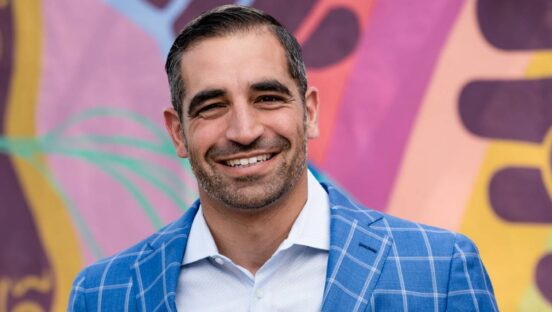
Jason E. Brooks is a hospitality coach, author, and consultant with more than thirty years of industry experience. He has worked with six of the top one hundred restaurant brands in the United States, helping leaders and operators boost profitability and build high-performing teams through coaching-driven systems. He writes the Coaching Connection column for FSR magazine and is the author of Every Leader Needs Followers, Every Team Needs Coaching, and The 48 Laws of Coaching.
Editor’s note: This article is part of The Coaching Connection, a biweekly column series from restaurant expert Jason E. Brooks. Check out the others below:
- From Field Visits to Field Intelligence: The Next Era of Multi-Unit Leadership
- How to Turn Store Visits Into Coaching That Builds GM Confidence
- The Hidden Cost of Multi-Unit Leadership: The $1,000 Visit
- Gratitude That Sticks: How Recognition Builds Retention
- Coaching Across Generations Means Meeting People Where They Are
- The Growth Mindset Reset: Finishing the Year Strong, Planning for 2026
- Leading Through the Rush: How to Steady Teams in Stressful Seasons
- Every Team Needs Coaching. This Restaurant Leadership Book Shows You How
- How to Be a Better Restaurant Manager When You’re Stuck in the Middle
- The Feedback Shift: From Gut Feeling to Leadership System
- Coaching is Culture: Why Great Teams Don’t Rely on Compliance
- Which Hat Are You Wearing? The Leadership Balance Behind Great Restaurant Teams
- Coaching Isn’t a Perk—It’s an Exit Strategy
- Leadership is Not Plastic: Coaching Lessons from Barbie and the Women in Restaurant Leadership Summit
- The Real Cause of Quiet Quitting in Hospitality? Silent Leadership
- How to Eliminate Chaos in Your Restaurant with This 3-Part Framework
- Data-Driven Quick Wins for Restaurant Success
- The $39.99 Problem: Why Restaurant Workers Are Suffering—One Pair of Shoes at a Time
- You’re Not Losing Staff—You’re Losing Trust. Here’s How to Earn it Back
- The Real Reason Your Managers Are Failing (And it’s Not What You Think)
- How the ‘4 Walls, 4 Blocks, 4 Miles’ Strategy Can Transform Your Restaurant Marketing
- The Simple Leadership Practice that Builds Stronger Restaurant Teams
- Master Your KPIs: The Recipe for Restaurant Success
- Why Onboarding is Your Secret Weapon for Long-Term Employee Retention
- Why Restaurant Owners Struggle to Delegate—And 5 Steps to Fix It
- Coaching in the Moment: 90 Seconds That Change Everything