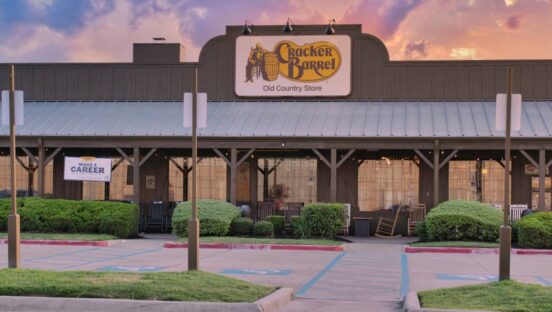
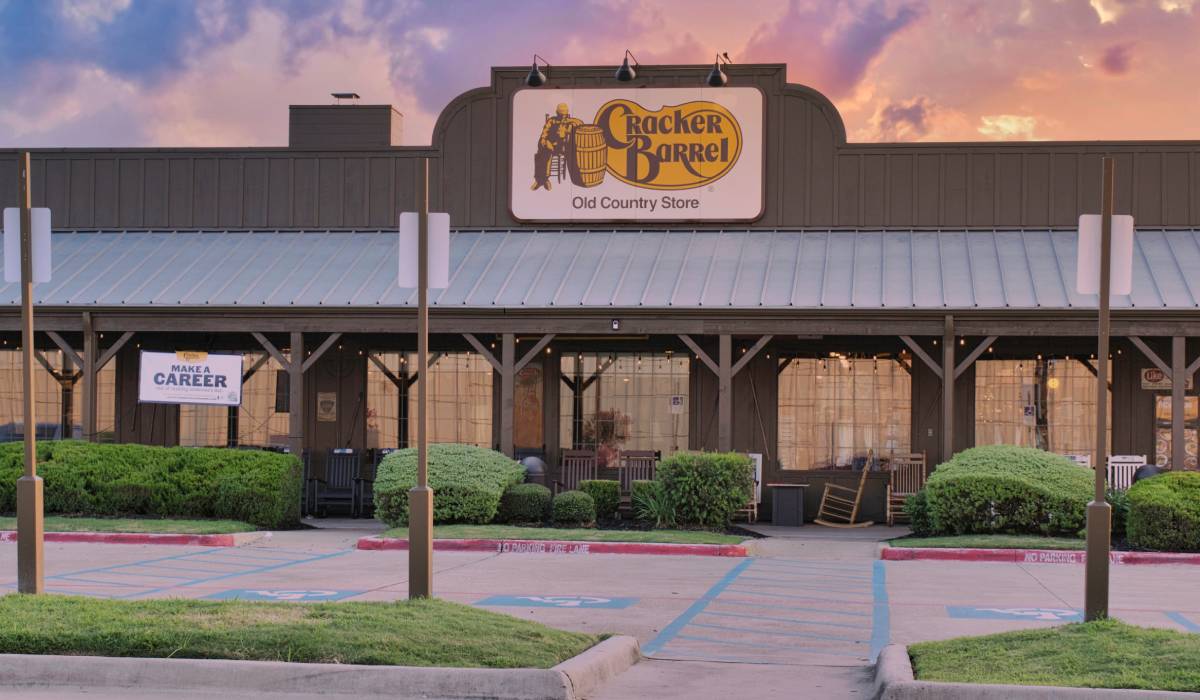
Cracker Barrel’s fourth-quarter restaurant sales declined as traffic fell 6.1 percent, but new CEO David Deno sees a path to improvement in the food guests order, the service they receive, and the retail shop they visit on their way out.
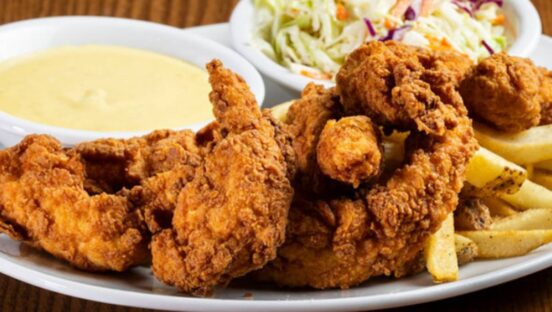
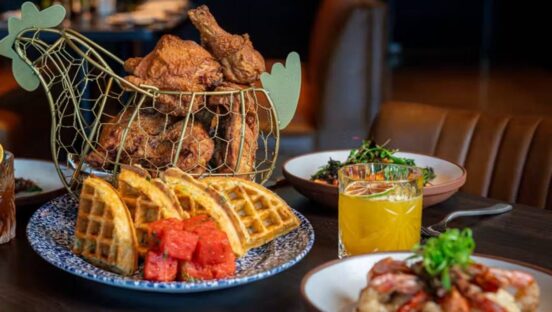
Deno, who took the job roughly six weeks before the company’s earnings call, said he spent his first weeks visiting stores and speaking with employees and guests. His early assessment places dinner at the top of the list for food investment. Cracker Barrel plans to upgrade its chicken, hamburger, and steak offerings and work on delivering meals that meet guest expectations for taste, temperature, and quality on every visit.
READ MORE:
Cracker Barrel Names Former Bloomin’ Brands CEO David Deno New Chief Executive
Cracker Barrel Sells Maple Street Biscuit Company Assets
Why Cracker Barrel is Feeling Confident in its Turnaround
The investments are included in the company’s fiscal 2027 outlook. Breakfast continues to produce Cracker Barrel’s strongest food scores and traffic trends, giving the chain a source of strength as it works on dinner.
The plan follows a fourth quarter in which comparable restaurant sales fell 2.1 percent. Traffic declined 6.1 percent, offset in part by a 4.2 percent increase in average check that included 4.4 percent pricing. CFO Craig Pommells said comparisons with the prior year varied considerably between the third and fourth quarters. Adjusting for that variability, he described the traffic trend as gradually improving. Fourth-quarter revenue came in above the company’s expectations.
Total revenue was $849.3 million, including $698.5 million from restaurants and $150.8 million from retail. Off-premises business accounted for 19 percent of restaurant sales, up roughly one percentage point from a year earlier, driven by third-party delivery growth.
Cracker Barrel expects comparable restaurant sales to rise 3 to 5 percent in fiscal 2027, with pricing contributing roughly 3 percent for the full year. It projects total revenue of $3.325 billion to $3.4 billion and adjusted EBITDA of $180 million to $200 million. The forecast calls for no new restaurants this fiscal year.
Pommells said menu changes should contribute alongside pricing. Guests have responded to new appetizers and shareable items, as well as the option to upgrade an entrée from two sides to three. Those purchases offer a way to lift menu margins as the company works to bring more customers into its restaurants.
“We do think as we look to the future and we think about dinner and so on, there’s opportunity in the menu mix component of the business that is a win-win for our customers and then obviously improving our margins as well,” Pommells said.
Deno said the company will pursue savings in areas guests are less likely to notice, including work outside the restaurants and technology. Inside the stores, he pointed to dessert sales and side orders as opportunities to improve margins through what guests choose to buy.
The company also reported gains in several guest measures. Its Google Star rating increased 2 percent year-over-year in the fourth quarter and stayed near an all-time high. Food taste and service scores rose nearly 400 basis points from the year-earlier period, and food temperature scores improved 500 basis points. Hourly employee turnover improved 450 basis points, and manager turnover improved 85 basis points.
Deno said training and development will be part of sustaining those gains. Cracker Barrel employs roughly 75,000 people, and he identified store teams as essential to delivering a consistent visit.
The retail shop is another opportunity. Comparable retail sales increased 0.7 percent in the fourth quarter, the segment’s strongest comparable-sales growth since the second quarter of fiscal 2023. Higher average selling prices and more items per transaction helped offset fewer shoppers. Toys and housewares performed well, and the earlier arrival of Halloween merchandise gave sales a lift.
Deno said he wants to make the shops easier to navigate through simpler product layouts, wider aisles and clearer sight lines. He also sees room to connect merchandise more closely with restaurant visits.
“The business is a real competitive advantage because we are the only full-service restaurant brand offering guests a true retail experience alongside their meal,” Deno said.
Cracker Barrel Rewards gives the chain another way to reach guests. The program has more than 12.5 million members who account for more than 40 percent of tracked sales. The company recently launched a new website and app and is working to improve how it tailors offers and messages to members. Pommells said advertising spending is expected to run near 3 percent of sales in fiscal 2027.
Value will also matter as Cracker Barrel works to recover traffic. Deno said the chain sees pressure among lower-income guests, a pattern Pommells said is accompanied by relative strength among higher-income customers. Pommells put Cracker Barrel’s average check near $16 and cited its $7.99 Sunrise Pancake Special, weekday Early Dine meals starting at $8.99 and lunch specials as options for guests watching their spending.
On profitability, adjusted fourth-quarter EBITDA rose 11.4 percent to $62.1 million. That figure included a net $9.1 million benefit from tariff refunds after the company reinvested $5.9 million of the $15 million it received. Pommells also noted two offsetting $10 million legal settlements in the adjusted results. Adjusted earnings were $0.99 per diluted share.
The company ended the quarter with $337.2 million in debt, down $147.4 million from a year earlier. It used $77 million in net proceeds from a sale-leaseback transaction to reduce debt. Cracker Barrel expects fiscal 2027 capital spending of $110 million to $125 million, with approximately 65 percent going toward maintenance and 35 percent toward technology and other initiatives.
Deno said it is too soon, after six weeks in the role, to set a longer-term target for sales, margins or restaurant growth. For now, the company is looking to turn better guest scores and menu purchases into sustained traffic gains. His view of the immediate work is direct.
“We want to invest in it more and make it even more craveable,” Deno said.