Cheesecake Factory EVP and CFO Matthew Clark is no stranger to questions about Flower Child. “Many, many” have poured in from the investor community, he said, asking about a brand that joined the polished casual giant’s portfolio seven years ago when it purchased North Italia and Fox Restaurant Concepts (where Flower Child resided) for about $308 million.
Cheesecake Factory originally bought in three years earlier, in 2016, when it grabbed a minority stake under a deal that allowed it to later acquire full ownership. North Italia touted nine stores. Flower Child—just two years old at the time—had five.
Today, there are 50 of the Italian casual concept and 40 of the fast casual (there are 220 or so Cheesecake Factory locations).
As is often the case on Wall Street, Clark said, investors understand but probably underappreciate the emerging chain’s path. Flower Child will expand at a pace that makes sense for the brand, he explained, whether it concerns site selection, labor, or just making sure it has the right management unit-by-unit. “And so, I think, we’re continuously reeducating,” Clark said during the Barclays Annual Global Consumer Staples Conference. “Wall Street just loves growth. And we want to make sure that it’s quality growth.”
It is understandable, however, why investors would wonder if Cheesecake Factory is going to press on the pedal. Flower Child posted same-store sales gains of 13 percent last quarter (17 percent two-year stack). Roughly 8 points flowed from traffic, with 2.5 percent pricing and an added check lift from catering.
That spiked annualized average-unit volumes to $5.4 million alongside adjusted mature store-level margins of 20.1 percent. A few older restaurants posted $6.5 million to $7 million.
For perspective, if Flower Child was one of the top 50 grossing QSRs in the country (per the QSR 50) by systemwide sales, its AUV would slot fourth, ahead of McDonald’s ($4.088 million) and behind In-N-Out ($6.032 million). Shake Shack follows at $4.048 million.
Flower Child’s AUV would also rank second on QSR’s Contenders list, trailing Portillo’s ($8.5 million) and fronting Jollibee ($4.990). The $5.4 million sailed fellow publicly traded fast casual sweetgreen ($2.677 million).
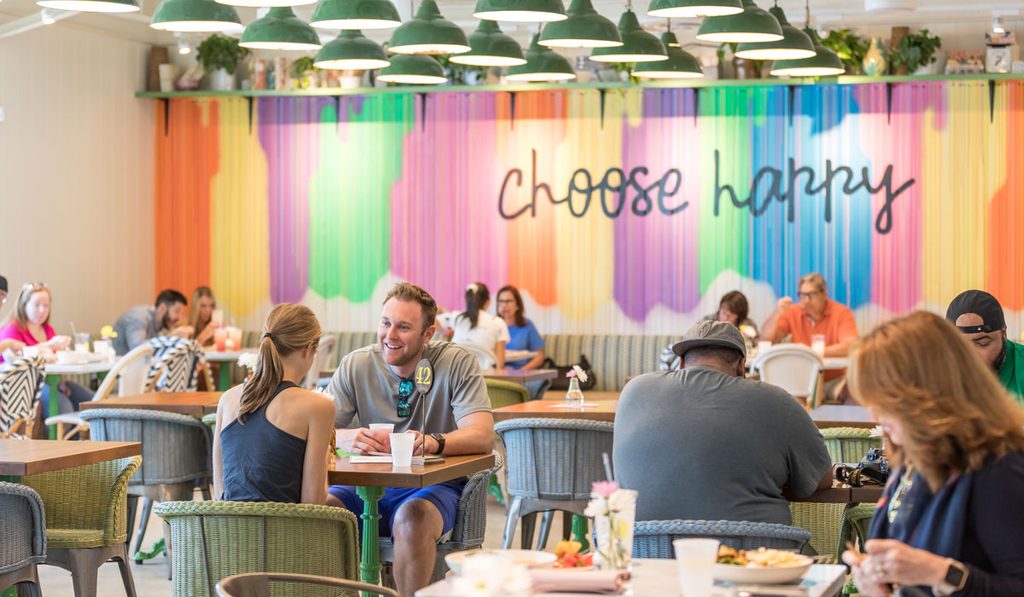
Still, Flower Child is hardly in idle state. Clark said the company aims to step into the 20–25 percent growth range. For the full fiscal year, seven are expected to open, as well as five to six Cheesecake Factory boxes, six to seven North Italias, and as many as seven of FRC’s other concepts, like The Henry (a recent opening, in Chicago suburb Wilmette, pushed $10 million Year 1 AUVs at weekly sales of $200,000).
Clark said Flower Child boasts the best unit economics of Cheesecake Factory’s suite. It’s about 33 percent cash-on-cash returns. It also has the largest total addressable market given it fits any geography, smaller or larger cities, and more. Additionally, the company knows when it densifies, as it’s done in Dallas and Phoenix, performance increases alongside awareness.
It’s a brand uplifting from growth rather than being concerned about sales transfer.
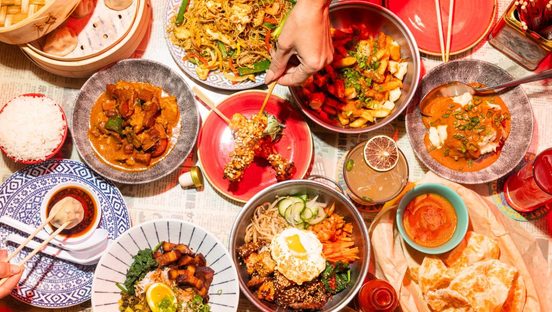
And why has Flower Child carved such a defined counter-service niche? Clark said the company internally calls it, “The Cheesecake Factory fast casual.” It’s not assembly line. The setup is scratch kitchen, open concept, where customers see food being made as they come in.
“And it’s got a huge, defensible moat,” Clark said, “because not only does it have the price point of fast casual, the breadth of the menu, it’s got a vibe in the restaurant.”
If you unpack four quadrants of business potential, he added, Flower Child splits through opportunities. It’s a shade over 40 percent dinner versus under 60 percent lunch. “Which for fast casual,” Clark said, “is very differentiated.”
It’s also essentially even with off-premises and in-store mix (outside category norms as well).
“And so, we really think that there’s the same story as Cheesecake Factory,” Clark continued. “We compete against everybody and nobody.”
The brand’s menu touts health-forward, craveable items, president David Gordon said last quarter, with a broad range at accessible price points, complemented by “thoughtfully designed restaurants that provide a more elevated experience than traditional fast casual.”
The company keeps working on Flower Child’s talent pipeline and operating capabilities while leveraging Cheesecake Factory’s larger scale, systems, and expertise.
Total Q2 sales for Flower Child reported $56.6 million, up 18 percent from the prior year. Sales per operation week were $101,300.
Gordon explained a customer at Flower Child can spend $13 for a “Mother Earth Bowl” or get a protein plate. “I think it’s meeting guests also for many different need states when it comes to going out to eat, right?” he said. “It could be a quick lunch, could be sitting down at dinner. … And I think the dine-in experience, the highly designed restaurants and the higher touch of service that people really, really appreciate today that we’re bringing them their food. It’s being served by a server. We’re clearing their plates. It’s being served on real plateware. I think it is appreciated today that people want experiential dining even in that fast casual setting, and that’s playing out at Flower Child.”
Etienne Marcus, Cheesecake Factory’s VP of finance and investor relations, added the “gating factor” for Flower Child remains people. It won’t develop if there’s not a pipeline of managers ready to step in. It’s been fostering that from within.
“Certainly,” Clark said, “a tremendous growth opportunity for the company.”
The state of the customer, and other happenings
Cheesecake Factory is building off a Q2 where records dropped. It generated more than $1 billion in revenue for the first time and net income rose 25 percent to a historic $68 million. Same-store sales bumped 5.8 percent (2.7 percent) and outpaced Black Box’s Casual Dining Index by 350 basis points.
Average weekly sales also hit a company watermark to surge AUVs north of $13.5 million and store-level margin was 20 percent—the chain’s best result in a decade thanks to sales leverage, labor productivity, and food efficiency, which offset commodity pressures.
And notably, Cheesecake Factory’s gains did not erupt from a single promotion. It instead held an ongoing playbook of consistent execution, new menu categories, digital engagement, delivery, and amplifying a rewards app that arrived early April.
There is capacity to chase as well. Compared to pre-COVID, traffic today on-premises is down 10–15 percent. And there are units in the system generating $16 million to $18 million.
“So, good problem to have,” Marcus said.
Clark began his presentation at Barclays’ event by addressing the state of the consumer. He reiterated what’s been a recurring narrative for months now (maybe years): the guest has money to spend. But they’re more discerning.
What that means for Cheesecake Factory, he said, is tightening margin for execution. “You’ve got to meet them where they’re at with the value proposition for whatever that means for you,” Clark said.
At Cheesecake, it signals large portions and relevant price points. Clark said, while not easy, he considers this a “winnable scenario.”
The brand tracks ample lines of data and believes it appreciates the benefit of having multiple types of concepts in many trade areas. So, it can see what’s landing with guests across varied occasions.
And it continues to bring in younger consumers, a cohort that’s been particularly elusive for some. Gordon in Q2 said there’s been clear pickup. Internal research shows the group keeps returning to malls. Social media activity and engagement are buzzing, too. Some of it planned. Some not.
Meanwhile, Cheesecake Factory continues to refill the funnel across broad demographics. “I think there’s market share to be had,” Clark said. “But I think that restaurants in general are performing as well as any consumer sector and probably casual dining better than most as I think what guests are really looking for are experiences. We provide great experiential dining opportunities for people to come together and have a little escape from life.”
Examining long-term trends, food-away-from-home keeps rising, he added. “We joke about the fact that people don’t know how to cook anymore. But they also grew up watching the food channel and all of those attributes about socialization. You even see that in the mall traffic today that the younger guests want to go back to the mall to have these social events.”
In plain terms, there are myriad factors at work. Zeroing on value, Clark said, it often starts with optics. The first view being, does a guest feel they can afford to go out?
Cheesecake Factory leans into choice. Diners can decide if they want to have a salad and free bread or if they want to trade up and order a piece of cheesecake. “Value has been important,” Clark said. “But I also think there’s a huge experiential component that’s also continuing to go on and publicly grow.”
A lot has changed in a short period—volatility restaurateurs are rather used to. Going back nine months, when the country was mired in a government shutdown, traffic felt fleeting, Clark said. Now, instead of wondering how to bounce back, Cheesecake Factory fields questions on how much traffic is truly out there, and how much of it is sustainable?
Clark said, external factors removed, the dynamic shifted thanks to Cheesecake Factory’s focus on execution and also, as mentioned, some sparks from social media.
Clark was asked about GLP-1s, too, and how growing adoption and accessibility to weight-loss drugs might affect results. He likened the landscape to when Cheesecake Factory, in 2018, was required to explicitly list calorie counts on physical and digital menus as part of an FDA rule that circled chains with 20 or more locations.
“And everybody [was saying], so that was the demise of Cheesecake Factory back then, right?” Clark recalled.
Instead, the brand has seen order rate of cheesecakes keep going up. What data showed is customers choose not only how to allocate their money, but their calories as well.
Skipping a couple of snacks could just mean they’re saving up for when they go out on a Thursday night to The Cheesecake Factory. “They want to have the full experience,” Clark said.
The brand features a “SkinnyLicious” menu that’s “probably as big as many restaurant’s total menu,” he noted. It’s a lineup with items sub-590 calories.
In theory, it would represent a solid indicator if customers began skewing toward smaller portions. But SkinnyLicious has been about the same percentage of sales as always, Clark said.
“So, we don’t think that for our occasions that’s a big component of how our guests decide to spend their money and consume The Cheesecake Factory,” he said.
Looking ahead
Clark said there are “some fun and interesting” add-ons headed to existing programs, from menu innovation to rewards and app features. It’s a flywheel enabling Cheesecake Factor to control its destiny with traffic and ticket.
Clark said Cheesecake Factory feels more ownership of those levers than it has “in quite a while.”
Dialing back three years, when it launched rewards, the moment proved a tipping point for the company to spend and invest more. But it also ignited Cheesecake Factory’s efforts to collect data and connect with customers.
That program kept progressing and heightened in April. Clark said the app gives Cheesecake Factory a “whole other level” of engagement. Rewards picked up. Engagement lifted at the 30-, 60-, and 90-day critical time marks.
Clark said Cheesecake Factory integrated these tools with two foundational elements—operational excellence and menu innovation.
It’s more willing today to talk about the menu and more apt to banter on social media with a “playful tone.”
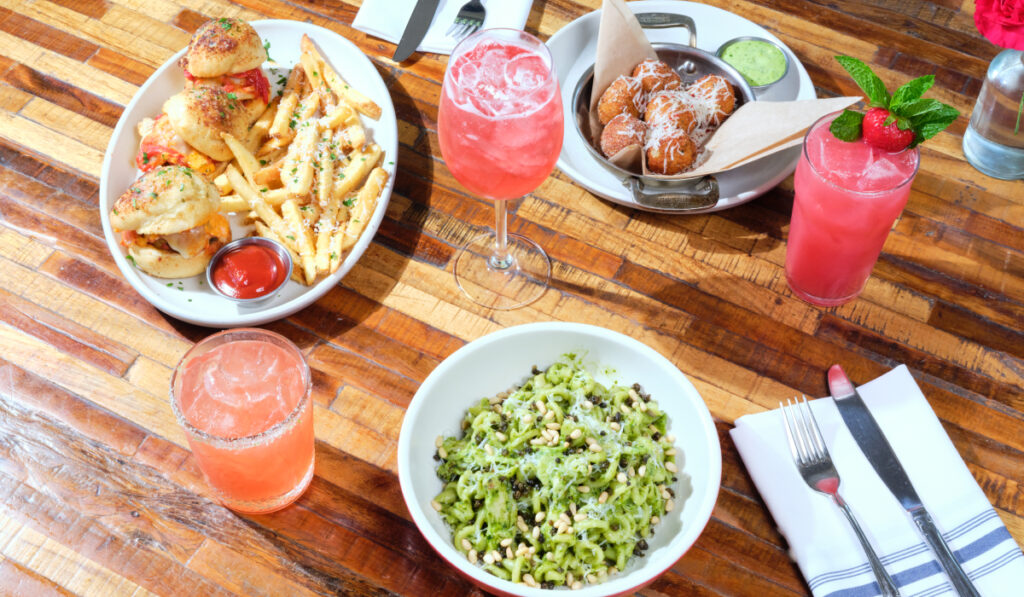
“We’re talking about things like more is more, right? We’re embracing the large portions. We’re showing ginormous pieces of chocolate cake, which are then getting picked up on social media and then we’re engaging with them,” Clark said. “And so, I think that third leg of the tool is really kind of a new story for Cheesecake Factory to figure it out; to embrace that and to propel the other two core components.”
Speaking to rewards specifically, Cheesecake Factory took its time understanding what worked and what guests wanted. And the No. 1 piece of feedback was to launch an app. Pre-COVID, Cark said, Cheesecake Factory felt the larger casual-dining category wasn’t ready.
That shifted as digital natives flooded in and suggested they would, in reality, be interested in dedicating mobile real estate for an app of a restaurant they visit quarterly, “which is kind of interesting,” Clark said.
It was about this time a year ago when Cheesecake Factory said, OK, research suggests rewards are going well. But it’s time for a spark. It outlined a six-month timeline to launch the app. “And it was way better than we thought,” Clark said. “The adoption and the engagement piece of that.
Gordon in Q2 noted engagement was “terrific” and people appreciated benefits of making reservations. There is a complimentary birthday slice and ability to track rewards and engage with offers when guests are in-store. Cheesecake Factory also layered online ordering into the experience.
North Italia uptick and wider plans
North Italia sat on the other side of Q2 comps with Flower Child. Its same-store sales slid 3 percent, annualized AUV was $7.9 million, and adjusted mature restaurant margins fell from 18.2 to 15.6 percent due to sales deleverage and commodity inflation. Two Q2 openings generated weekly figures of more than $200,000.
The brand said it was preparing to test lower-priced pasta dishes, lunch specials, local digital advertising, restaurant-week participation, and community events. Its uplift, Cheesecake Factory said, could take “several quarters.”
Clark said, coming out of hyperinflation post-pandemic, where every brand took pricing, hikes arrived a bit later at North Italia. And as it mentioned with Cheesecake Factory and Flower Child, the goal is to give customers options and put them in control.
“We probably [came] across some psychological barriers,” he said of North Italia. “And we need to broaden those menus to have some anchor price points and make sure that we’re bringing guests of all cohorts.”
The net promoter score (recommend to a friend) at North Italia, however, reports roughly 7 points higher than Cheesecake Factory. So, the company knows customers who come in have a great experience.
But can the chain roll a new happy hour program, for instance, where it competes at a price point that isn’t discounting based?
Rather, Clark said, North Italia wants to welcome diners to price points “affordable for anybody.”
And then, if it wins them over, perhaps they’ll return for a dinner over a different time period. North Italia has some menu architectural work in store and plans to widen the funnel with media.
One thing it won’t do, Clark said, is take Cheesecake Factory’s chain road. North Italia differs in that customers view it as their local restaurant. “There’s a cohort that loves chains because of the consistency and the predictability. And there’s a cohort that wants to go to some place that nobody has discovered,” he said.
Clark was asked about AI as well. He feels it’s still “early innings,” but the company is looking at some functions.
“I think marketing is one which may not be a savings, but more an efficiency driver and a productivity driver,” he said. “That’s the flywheel—get more comps coming in the door. We’re looking at a big project with supply chain. There’s probably some opportunities there. When we think about like true back of house, whether it’s HR, finance, etc., I think that’s where we’ll look to say, can we just hold head count hold expenses flat and grow, right, and get some efficiencies with that. But that will take a little bit more time.”