Few questions hang over full-service restaurant operators and beverage leaders more heavily right now than whether the next generation of drinkers is going to show up at all.
Earlier this fall, a group of industry experts took that question on during an FSR NextGen panel at QSR Evolution Conference in Atlanta. Their answer is more optimistic—and more demanding of operators—than the prevailing narrative suggests.
Gen Z is not abandoning alcohol so much as abandoning the automatic drink order. Younger guests are moving between full-strength cocktails, low-ABV drinks, and nonalcoholic options depending on the occasion, and beverage programs increasingly have to earn every sale.
“We’ve all heard that Gen Z doesn’t drink,” says Ian O’Neil, director of consumer intelligence at Rubix Foods. He notes that people often overlook the generation’s actual age range, which currently spans from roughly 14 to 29.
“So, we’re judging an entire generation when half of them can’t legally drink,” he says. “Maybe let’s pump the brakes.”
Recent research supports his skepticism. In the U.S., the beverage alcohol participation rate among legal-drinking-age Gen Z consumers reached 71 percent during the first half of 2026, up from 68 percent two years earlier, according to IWSR’s twice yearly Bevtrac survey of consumer behavior. That put the generation roughly in line with the 70 percent participation rate recorded across the overall U.S. population.
Morning Consult found a similar trajectory. Between late 2024 and mid-2026, Gen Z adults were the only generation whose consumption increased in all nine categories the firm tracks. Weekly-or-more drinking at bars and restaurants made the largest jump, rising from 26.1 percent to 31.8 percent.
Some of that growth is a function of more Gen Z consumers reaching legal drinking age and moving into their mid-to-late 20s, when alcohol consumption has historically peaked. But aging does not tell the whole story. When Morning Consult held age constant, the share of 21- to 29-year-olds who drank at all was essentially flat, while weekly-or-more bar and restaurant drinking still rose by roughly five percentage points.
In other words, more young adults are not necessarily taking up drinking, but those who do drink are doing so more often—particularly on-premises.
Nonalcoholic Isn’t a Zero-Sum Game
The explosion of mocktails and other nonalcoholic options isn’t always the substitution story it is often framed as.
Gen Z’s adoption of low- and no-alcohol beer climbed from 37.5 percent in late 2024 to 40.8 percent in mid-2026, according to Morning Consult. That tied millennials for the highest rate among any generation. Yet regular alcohol consumption and bar frequency among Gen Z rose over the same period.
The findings point to an additive consumer: Young adults are incorporating NA options alongside alcohol rather than necessarily replacing one with the other. A guest might choose a cocktail during one occasion, a mocktail during another, or alternate between the two over the course of an evening.
For operators, moderation and alcohol consumption aren’t competing bets. The same customer can—and increasingly does—participate in both.
“Nonalcoholic beverage trends and alcohol beverage trends kind of pass things back and forth,” O’Neil says, pointing to functional beverages as a current example. “I wouldn’t say that one goes up and one has to go down.”
That distinction is important at a time when softer alcohol volumes can be mistaken for evidence that consumers have stopped drinking. O’Neil notes that weaker restaurant alcohol sales also could be tied to softer traffic across the industry, driven in large part by inflationary pressures “that have nothing to do with alcohol.”
Economic pressure may also influence how guests build their checks. Consumers who are watching their spending can be more selective about when they add alcohol to a meal, how many drinks they order, and which occasions warrant a premium cocktail. A lower-priced NA drink can give a cautious guest another way to participate without committing to a more expensive purchase.
“There’s a big difference between buying a $12 cocktail you didn’t like versus a $4 dirty soda,” O’Neil says.
That lower barrier doesn’t make NA drinks an afterthought. It makes them another opportunity to capture a beverage sale from a guest who might otherwise order water or nothing at all.
It’s difficult to overstate how quickly that opportunity has changed expectations for restaurant beverage programs. Unfiltered Hospitality, a Miami-based consultancy that develops cocktail programs for restaurants and bars nationally, now routinely works with clients that require mocktails to account for 10 to 20 percent of their cocktail menus, says cofounder Ben Potts.
“That was unheard of when I first started,” he notes. “Now, it’s a firm requirement.”
Potts warned that developing a strong NA menu can require more rigor than creating a traditional cocktail list, not less. The available product universe is thinner, and operators cannot always rely on established spirits to provide complexity, texture, and structure.
“You have to think harder. You have to look for things that are a little harder to find,” Potts says, “or in some cases, depending on your operation, you have to develop them yourself.”
The Automatic Drink Order Is Gone
In today’s landscape, Potts says, operators can no longer count on a beverage landing on the check by default. He has limited patience for those who attribute every decline in alcohol sales to changing guest behavior.
“I speak with a lot of restaurant operators who are like, ‘alcohol sales are down, people aren’t drinking,’” he says. “That’s because people used to walk in, and you would just expect the alcohol sale, and that’s not the case anymore. You have to give them a reason to order a beverage on your menu. You can’t just hope that they already want something.”
Creating that reason under current margin and labor pressure comes down to a repeatable loop, he adds: “Decide intentionally, operationalize rigorously, and then evaluate continuously.”
The middle step is where many programs fall short.
“You can’t just put it on a menu [and] hope that it sells,” Potts says. “You have to train people on how to sell it, what it means, why it’s important to the concept, why it was made for them.”
The mechanics are not necessarily complicated. They include checklists, documentation, and execution training. But each piece has to be deliberate, he notes. That means employees should understand how a drink tastes, who it is designed for, and how to explain its value—whether it contains alcohol or not.
Then comes an honest audit. Are guests ordering the drink? Are they ordering it again? And is the restaurant making money from it?
“If those answers are no, then you have to do it all over again. And if you repeat that cycle enough, you’ll get good at it.”
O’Neil’s broader point is that a drink never stands alone. It must make sense within the restaurant’s food, brand and value proposition.
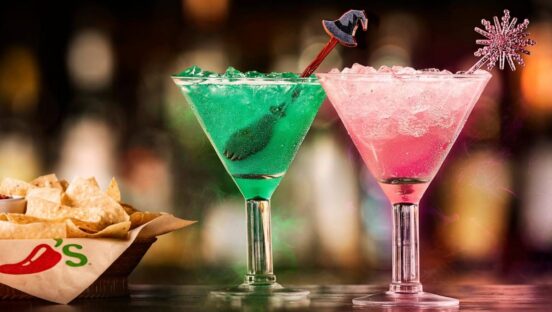
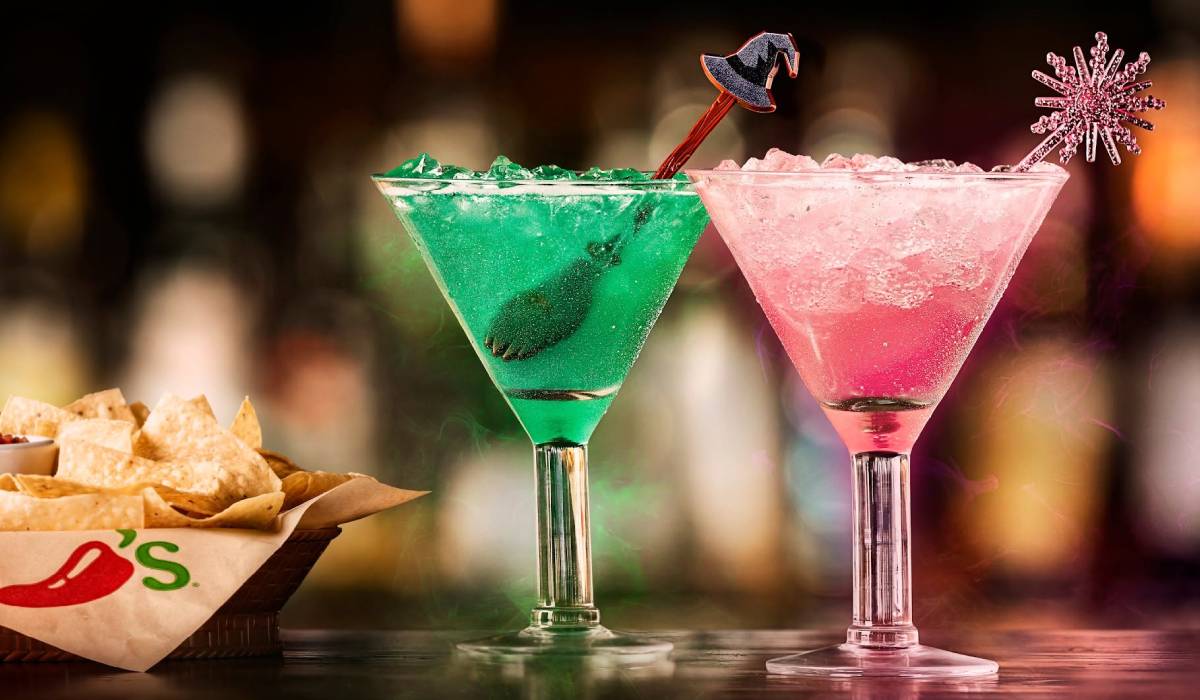
“Alcohol doesn’t exist in a vacuum on the menu,” he says, pointing to Chili’s as an example. The chain does relatively little food innovation but regularly launches new margaritas, allowing it to create novelty in a part of the menu that customers already associate with the brand. “They can get weird with it, because they own that specific area, and that’s true to their brand.”
Operators may not always need to create an entirely new product to communicate that kind of value. One of the cheapest available upgrades, O’Neil says, is language. Plenty of restaurants are already executing beverages at a high level, “but you don’t get credit for it, because you’re not calling it out.”
“If it’s crafted, if it’s handcrafted, call that out,” he says. “Those types of words signify it, and perception is reality a lot of times.”
That language is becoming more valuable as consumers encounter more automated and mass-produced content in their daily lives.
“Especially in a day and age with AI slop everywhere, things that denote handcrafted—that a human touched this and did this—that’s going to elevate you, and there’s going to be premium perceptions around that.”
The same principle extends to the details guests can see and experience: a foam, a distinctive texture, a garnish, or an unexpected presentation. Those elements can justify the purchase and give customers something they cannot easily recreate at home.
“Those are the types of things that make people drive past one restaurant to go to yours,” O’Neil says.