Even approaching 700 locations, First Watch still feels like it’s having a coming-out party, CEO Chris Tomasso says. The daytime chain’s unaided brand awareness lifted more than 50 percent this past quarter and aided bumped 15 percent from early last year. But First Watch remains, as was the case when it went public in 2021—when a national survey suggested only 11 percent of consumers were familiar with the concept—a chain relatively unknown, especially compared to some casual-dining peers.
“We see that as just a tremendous opportunity for us to continue to grow,” Tomasso says.
The fastest-expanding full-service concept in America (FSR 30 data to be released in September) had another angle going in 2021 that portends whitespace. While customers weren’t always aware of First Watch, it clocked 10th in net promoter score among the country’s 74 largest restaurant brands in a separate country-wide study.
Tomasso, who has been with First Watch since August 2006, when they were about 60 restaurants across nine states (he started as the company’s first CMO before elevating to CEO in 2018 after being president for three years), has seen First Watch add more than 600 restaurants and enter 24 additional states over his two-plus decades. And today, like then, there’s a guidepost he can’t allow growth to overshadow.
“We have to deliver the experience when they give us that trial,” Tomasso says. “And we have to get to five-star reviews early on. That also spurs trial by other people. It’s important that we execute the second we open the door for a new restaurant, or all our restaurants for that matter.”
In plain terms, First Watch needs to align experience with intrigue as it becomes more well-known.
There’s evidence that’s happening. The chain’s same-store sales grew 3.4 percent in Q2 (6.9 percent two-year stack) and traffic decreased 0.4 percent (two-year view of positive 1.6 percent). The latter turned positive in June and was 160 basis points better than Q1, when it slid 2 percent.
Total revenues also upped 15.2 percent to $354.7 million and restaurant-level operating profit margin increased to 18.8 percent from 18.6 percent.
The company opened 18 systemwide stores through 15 states, with a planned closure, to exit Q2 at 665 restaurants (586 company run and 79 franchised).
Returning to the earlier point of awareness, though, it’s a natural effect as First Watch becomes larger and reaches more markets. But it also owes to a marketing push that expanded early last year. Investments proved a “significant contributor” to Q2 performance, Tomasso says.
First Watch’s aim has been to drive at least one more visit from existing customers while also positioning the chain in the consideration set for new ones. In targeted acquisition campaigns run so far in 2026, 17 percent of new guests returned for a second visit, tracking higher than average. “We’re not just reaching new customers, we’re bringing them back,” Tomasso says.
First Watch has done so through targeted, data-informed tactics that enable it to reach customers where they are, speak to them with greater relevance, and evaluate the return on marketing spend with more precision than traditional broad-based marketing alone. It’s a foundational capability, Tomasso explains, able to serve First Watch as it grows.
CFO Ashlee Weisser, appointed to the position in June as Mel Hope retired, explained it as “not call-to-action-based marketing.”
“It’s more of a brand awareness, brand building, getting to know the brand kind of approach to the messaging,” she says. “And so, that takes a little bit longer to build, and we expect it to last a little longer as well.”
A key aspect was the expanded use of video, including YouTube and connected TV. Tomasso says these channels enhance First Watch’s ability to pinpoint specific demographic groups within markets and curate messaging at a more localized level. Additionally, it tracks responses with improved visibility down to the store level.
Using this test, learn, and act model provided First Watch with richer data and the capability to evaluate the performance of each outlet. In turn, it shifts dollars toward the avenues, markets, and messages providing the most-attractive ROI.
First Watch also leaned deeper into influencer and social media strategies as it looks to show up in an authentic and customer-centric way. “We view these efforts as important building blocks to create awareness, deepen engagement, and, ultimately, to convert that into restaurant traffic over time,” Tomasso says.
Chief brand officer Matt Eisenacher notes First Watch took a “meaningful step” forward in 2026 making influencers and organic a larger part of its paid media mix. He anticipates that will only increase next year given traction. “And so much so that because of the paid efforts,” Eisenacher says, “we’ve actually seen more organic [user-generated content] contribution as well. The more people see our brand and see the items on their feeds, they also want to start posting about it as well.”
Again, First Watch is rising nationwide with a combination of high sentiment and yet, still, ample trial to chase. It’s placed in the top decile for future purchase intent, Tomasso says, among well-recognized national and regional breakfast competitors.
What diners walk into, however, remains the enduring acquisition tool. First Watch had “a couple of home runs” from a culinary standpoint in Q2.
A new core menu launched in February 2026 and improved navigation as well as introduced enhanced offerings, such as barbacoa. It encourages add-on items and has worked as hoped, Tomasso says, with customers selecting more premium options. That’s led to per check average growth (it sits around $17 today) outpacing carried pricing in Q2, like it did in Q1. First Watch had pricing of about 3.7 percent in the quarter and took 2.8 percent at the start of Q3 to hold roughly 3.6 percent for the fiscal year.
And layered atop First Watch’s optimized core menu is its historic, seasonal “Follow the Sun” strategy that pulses multiple times per year along with what’s relevant.
The “Jumpstart” menu ran from early January to late May and featured a Chimichurri Steak & Eggs Hash LTO that became First Watch’s best-selling of all-time. It contributed to the chain’s positive mix of 50 basis points and rolled into a summer lineup with a Chipotle Steak and Queso Hash likely to end up as the second best-selling LTO on record when it flames out in mid-August.
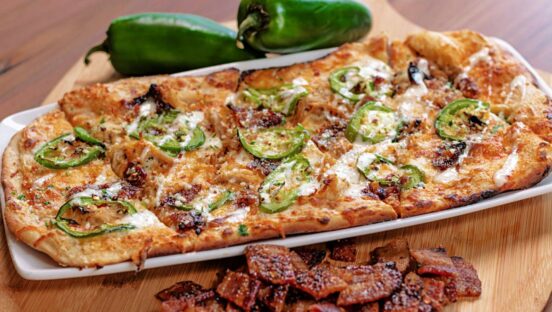
The menu also featured First Watch’s newest sharable, Honey Butter Biscuit Bites, which is on pace to become the highest-mixing sharable since the brand introduced Million Dollar Bacon.
Tomasso says it’s not all that surprising to see steak resonate. It was so popular, alongside the barbacoa breakfast tacos and Chilaquiles Breakfast Bowl, that overall COGS increased by nearly 100 basis points in Q2 (beef costs were in line with expectations; demand was higher).
Tomasso gets asked often, he says, about GLP-1s and the brand’s thoughts. If there’s one reality about this ever-evolving topic, it’s that protein factors centrally to what customers ask for.
And when it comes to the subject, what are two mainstays? Steak and eggs.
Turns out, First Watch can deliver against those demands rather well.
“As more and more people lean into GLP-1s, we’re going to be a great place to visit,” Tomasso says.
First Watch generally has looked at healthy eating as something that shouldn’t be subtractive.
Tomasso says the brand doesn’t focus on fads or being low calorie or trying to promote a specific headline. “We just want to offer healthy option to our customers. They know how and what they want to eat,” he says. “They come in knowing what they’re following. … There are things on the First Watch menu where you can eat gluten-free. If you want more fiber, we have that.”
Coming next—Pumpkin Pancakes. Tomasso hints there’s a “handful” of innovative tests focused on higher capacity dayparts in the works, too.
“All of those things are clicking really well,” he says. “And now, we’re starting to really see benefits from our marketing program that we’ve been ramping up … We’re running on all cylinders.”
Sheer growth can’t be understated as an awareness igniter. First Watch plans to open between 53–54 company operated stores this year (also nine to 10 franchised) and will look at 50 annually going forward (five franchised added on top) with a focus on self-funding organic development. For all intents and purposes, First Watch opens the equivalent of a regional competitor each year. Or about half the footprint of some more franchised-heavy growth models in 100-plus-unit Another Broken Egg Café and Eggs Up Grill.
Tomasso says First Watch has a real estate pipeline with more than 100 projects in various stages of development. The brand in Q2 opened in Nashua, New Hampshire, marking its entry into the state and third Boston DMA opening since debuting last January.
He says sales volumes of 2025 and 2026 stores continue to outperform both First Watch’s comp base and underwriting targets. This past year’s openings are targeting $2.8 million average-unit volumes by Year 3 with $1.8 million in net build-out costs. The current actualized three-year cash-on-cash returns sit around 35 percent.
First Watch is aware growth will result in some sales transfer location-by-location. But it internally calls that “strategic sales transfer,” not because it’s making excuses, Tomasso says, but because the company does so intentionally. It’s found fortressing markets eventually strengthen areas and lead to gains. So, while there’s an initial downtick, performance rises when a market densifies.
Orlando being a prime example. Five years ago, First Watch had half as many locations there as it does now. AUVs, though, have grown “significantly.” Did sales transfer happen along the way, with comps and traffic backtracking? “Yes,” Tomasso says. “But, ultimately, the amount of sales we’re doing in the market, the amount of profit we’re taking out of that market, and the ownership and leadership of that market, has been well worth it. And that’s the strategic part of it.”
A larger case in action—First Watch’s AUVs systemwide have climbed from about $1.6 million in 2019 to $2.5 million today.
Tomasso says the brand enters markets presently with awareness whether it’s been there or not. Spreading to 33 states means a lot of guests have tried it somewhere and now see First Watch where they live. That continues to become a more common tale. Also, it’s getting more sophisticated with site selection and First Watch’s reputation empowered it to grab “a lot” of sites at main and main locations facing major traffic areas.
As it’s mentioned in past quarters as well, roughly 50 percent of openings in the last couple of years have been second-generation sites where First Watch takes high-profile boxes and turns them into restaurants with an agile square-footage approach.
“We have that flexibility of opening pretty much anywhere we want because our restaurants perform similarly across geographies,” he says.
First Watch’s top-performing restaurants span 14 states and 22 DMAs. “So, we’re not a Southeastern brand,” Tomasso says of the company, which has been headquartered in Florida since 1986, three years after founders Ken Pendery and John Sullivan launched First Watch in Pacific Grove, California. “We’re a national brand. We dominate our specific segment of daytime dining. We set the bar. And I think the consumer has really embraced us.”
Tomasso sees more of that ahead as First Watch darts toward 2,200 domestic restaurants. Brunch has been tapped the fastest-lifting category of full service for “a lot of years” and, without much debate, First Watch’s success spurred competitive entry. “But we have such a headstart,” he says, “and such a lead. And I think we set the tone for our category.”
It’s on the brand, operationally and through its marketing and menu innovation, to keep differentiating, Tomasso adds—to emphasize its Latin and California flair and the freshness that separates First Watch as a brand with a healthy halo unlike the indulgent position of some other breakfast players.
“It’s about the connection and the occasion itself that I think people really are gravitating toward,” he says.