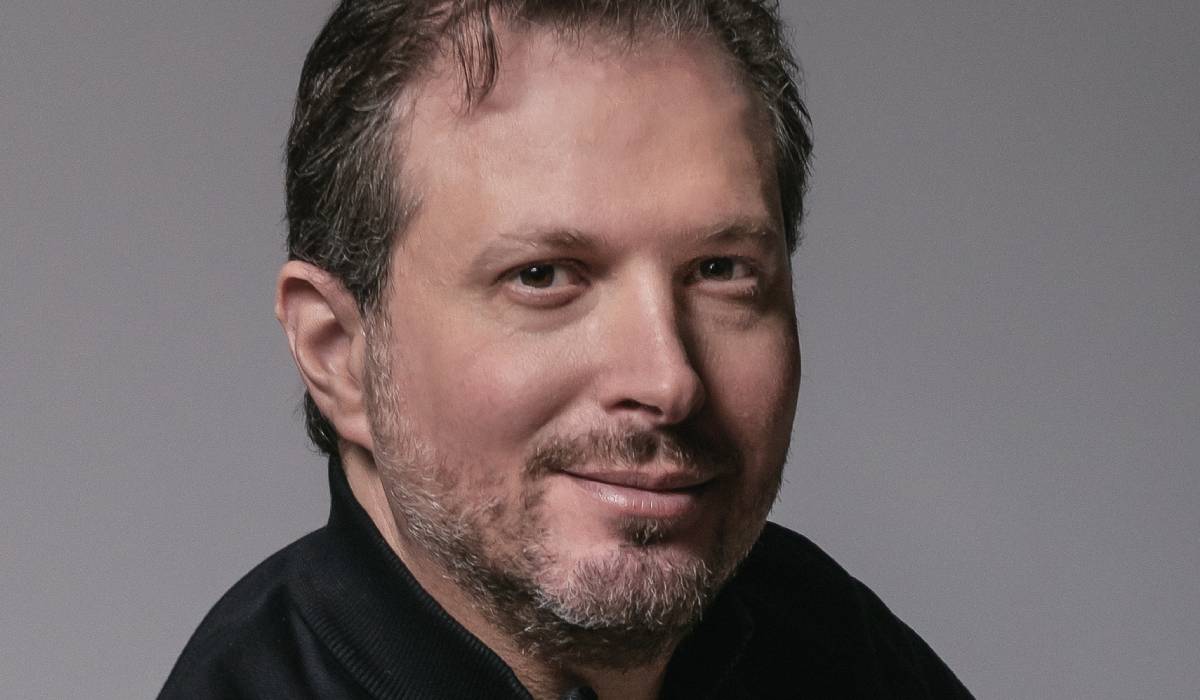
Rom Krupp has a background in sociology and economics. But it’s not a muscle he’s flexed all that much over the past three decades in technology.
If there ever was a time to change that, though, it was 20 or so months ago when it became clear to Krupp consumers were asking for hospitality in an ever-transactional dining space, with prices failing to match experience.
And that’s a debate that often starts with churn, a hardly a new conversation in full-service dining. Per the U.S. Bureau of Labor Statistics, there are roughly 2.3 million servers clocking in each year. And somewhere around 423,000 positions in need of being filled. The National Restaurant Association tabs server turnaround at 89 percent and a Cornell study figured the replacement cost for each employee at $5,800. Average retention? About 110 days, according to 7shifts.
Krupp, who leads his company OneDine, spoke with about a dozen CEOs and asked them how they’re addressing the age-old issue of knowledge vacating the building when an employee does. Most replied with a stock, “we’re working on retention.”
Krupp saw a different reality. Retention, he feels, is a privilege of restaurants with higher per person averages. Unless you’re in a small market where a lower PPA is, relatively speaking, lofty, your best servers are going to elevate out of the role or head to restaurants where they can wait on larger checks.
“So,” Krupp said, “retention is not the answer.”
“And that’s where I got a bit of insight—they’re all trying to fix retention. The problem is that you can’t.”
Rather, what operators need to address, he says, is the cost of churn; not churn itself.
This, too, wasn’t novel. Only it’s historically been accepted as a “cost of business.” It’s a mammoth estimate of $5 billion of costs flowing out the door for an industry where, per February data from the Association, 42 percent of restaurants failed to turn a profit last year and average net profit was 3.6 percent.
“At the end of the day, you can build the best technology in the world,” Krupp says. “If servers don’t want to use it, you’re not going to be able to implement it successfully. … How do you align everybody on the same goal? Well, you’ve got to give them a tool they want to use. You give them a tool that makes the guest experience better.”
And so, Krupp took a hard look at handheld tablets and what’s happening at the table.

Back to some sociology
“The problem today,” Krupp says, “is we hire servers almost like we hire flight attendants.”
What he’s illustrating is an experience you’ve likely encountered. Airlines give attendants a primary task of safety. They’re on the plane to get customers from Point A to Point B and people are conditioned to forgive what happens in between.
Has the same begun to happen in full service? If a server’s No. 1 target is to take orders, great service becomes a bonus.
“The reality is, we spend so much time ramping them up to be great order takers that we neglect to make them great hosts,” Krupp says. “And they’re hosting a party. They’re hosting an experience.”
His point is, don’t eliminate training; stop training servers on the process of order taking and instead train them on delivering hospitality.
It sounds elementary but it’s hardly easy to execute, particularly with the earlier notion around churn. What Krupp set out to build addresses this ideal—allow operators to teach servers to be great hosts while letting technology take care of the order asking knowledge.
“All the billions of dollars in execution falls down to the one person you’re interacting with on the flight,” he says of the airline example. “Then, it happens to restaurants.”
For the past 20 months, Krupp’s team worked on a solution called “Restaurant Ordering Mentor,” or ROM, fittingly. It’s a point-of-sale agnostic intelligence platform designed to tap into this sinking profit well of turnover.
Dressed down, it gives servers the intelligence of a restaurant in their hands while freeing them up to be more guest-facing. If that sounds like a typical handheld promise, where it differs is the system strips the need for servers to memorize the location of modifiers, menu structures, or understanding of where they have to scroll and search to find what a guest is requesting.
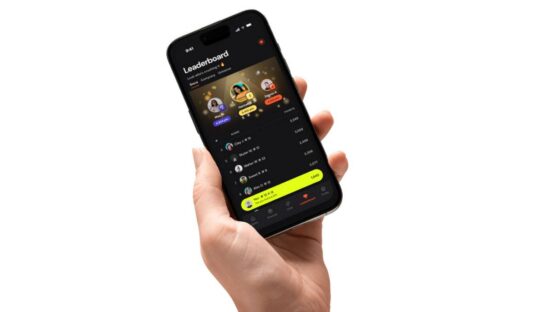
On ROM, servers enter orders typing like they would a text into their phones, and it can interpret from a few letters how to respond, mapping to the store’s menu data and guiding employees along the ordering flow.
Say, a guest tells a server, “I want a ROM Burger with no ketchup and onion rings instead of fries.”
Typically, a handheld requires a server to press boxes like they’re using a POS and progress to the right areas. Here, an employee could type, “R burger, no ketch, on rings,” and it will pick up the order. It also brings preferred pairings and upsells into the fold.
Before OneDine went live, it brought 10 random servers from the city into the office (the company is headquartered in Plano, Texas) and paid them for a few hours. It conducted a 15-minute orientation and let them deliver tableside ordering for two hours from a menu they hadn’t seen.
“And they successfully plugged all of the orders tableside,” Krupp says. “By the second hour, they were as fast as pen and paper.”
Handhelds have long been billed as table-turning engines. They boost speed and streamline checkout. Was that true of servers, though?
In Krupp’s view, a server’s job has been glossed over through the latest lens of technology innovation and these devices were actually slowing them down and muddying hospitality.
Servers shouldn’t “enter orders,” Krupp says, as much as “orchestrate experiences.” They have to manage multiple guests simultaneously and capture partial, conversational orders. This means adapting on the fly to things like preferences, allergies, upsells, and timing.
Often a server hand-writes orders and inputs later so the POS doesn’t slow them down. Yet an issue with doing so, Krupp says, is they must memorize the entire menu so they can ask questions customers don’t.
A Cornell study found a fully proficient server knows 150–300 menu item, with variants and modifiers; 40-plus cooking and allergy combinations; and 15–20 standard upsell phrases. New hires reach that level after 90–120 covers of live exposure.
Again, a pricey flywheel to keep trying to replicate.
OneDine placed body cams on servers during its in-office test. It saw eye contact on par with handwriting. ROM allowed them to move as fast with the same level of interaction servers struggled to mimic with some handhelds. And, in this case, they accomplished that within minutes of picking up ROM versus needing dozens of reps on the floor.
“Point is, it mentors there,” Krupp says of menu offerings and directives, like cross-selling, “but it doesn’t just mentor the ordering. It can handle the entire dietary and lifestyle of the customer as well.”
In action
ROM went live this week with a restaurant in Flint, Michigan. The trainer on-site spent 15 minutes with servers per-shift and, other than coming to her with questions, were on their own.
“We’ve ramped down four-to-six-week ramp-up periods of servers that, during that time they make errors, mistakes, lower table turns, into minutes,” Krupp says.
The implementation process, he adds, is 95 percent automated, 5 percent manual. It integrates into the existing point of sale and recipe systems. That 5 percent includes oversight on factors such as allergies. A store may also need to adjust for specific verbiage (if a restaurant calls appetizers “great beginnings,” etc.)
But you don’t have to teach ROM shorthand, Krupp reiterates. It learns from servers as they type and responds.
The key, he continues, is it takes away the need for deep menu knowledge, training, POS training, dietary understanding, and so forth. Servers don’t need to decipher business rules.
ROM guides and trains without impacting guest experience, he says.
High level, Krupp doesn’t see ROM as a technology play. He views it as a way to bring hospitality back to a casual dining arena where engagement suffers because of unwieldy churn.
If you break down the math, a guest has a 30 percent chance of walking into a restaurant and being served by an employee ramping up. Data shows PPA at 8 percent lower during this phase.
“So, if you’re always ramping up people,” Krupp says, “that means your PPA is always depressed, right? Your error rates are 3 percent higher when you’re ramping up people. That also means your error rate is always higher than what it should be. We don’t even know what we can be because our data has always had this problem.”
ROM, he believes, will be a mindset shift where operators have the power to control hospitality because they’re not trying to constantly get servers caught up. It will lessen cognitive load—a Cornell study also found a correlation between the size of menus and turnover rates—and make it so you’re not relying on memory retention to ensure execution.
Krupp admits OneDine backtracked on some of its own initiatives to head down this road. It’s a reaction to what he’s seen in the marketplace, where technology adoption by consumers at the table is trending negative, with the exception of payments. Digital ordering at the table, he says, “has gone sour” in the U.S. by customer perception.
“I think the main reason for that is limited service has dived into so much automation with kiosk and voice and all that,” Krupp says, “and consumers are venting now when they go to table service restaurants where they made a decision to be served. Don’t tell me to do it on my own.”
“I’m regressing back to go, ‘you know, it’s OK to do digital payments. But don’t do anything else digital,” Krupp says. “Not in the hands of the guests at least.”