Competing on a show like Top Chef looks a lot like living inside a pressure cooker—and there are pros and cons to that, as one can imagine. The high-pressure environment is stressful, and forces chefs to quickly learn and adapt to survive. But they come out on the other end irrevocably changed in one way or another—whether it’s the practical lesson of knowing exactly what you can execute in 30 minutes, the reality of what national exposure does (and doesn’t) do for reservations, or the emotional shift that comes from turning a cast of competitors into a kind of restaurant-family for life.
Charbel Hayek (Top Chef Middle East & North Africa (MENA) Season 5 and Top Chef: World All-Stars) puts it best: “The pressure will push you to move faster and make decisions in seconds, but you still need to trust your instincts, taste your food, and remember why you’re competing.”
Across five former “cheftestants,” a few recurring themes emerged: the shift from solo talent to shared leadership and real teamwork, and the way that living under the clock sharpened their instincts, clarified their point of view, and taught them to treat every dish and every decision as intentional. In the stories and interviews that follow, they explain where Top Chef pushed them, what stuck, and how those lessons are shaping their decision-making today. What lingers in the end is a new way of thinking about food, leadership, and what it actually takes to run a restaurant in 2026.
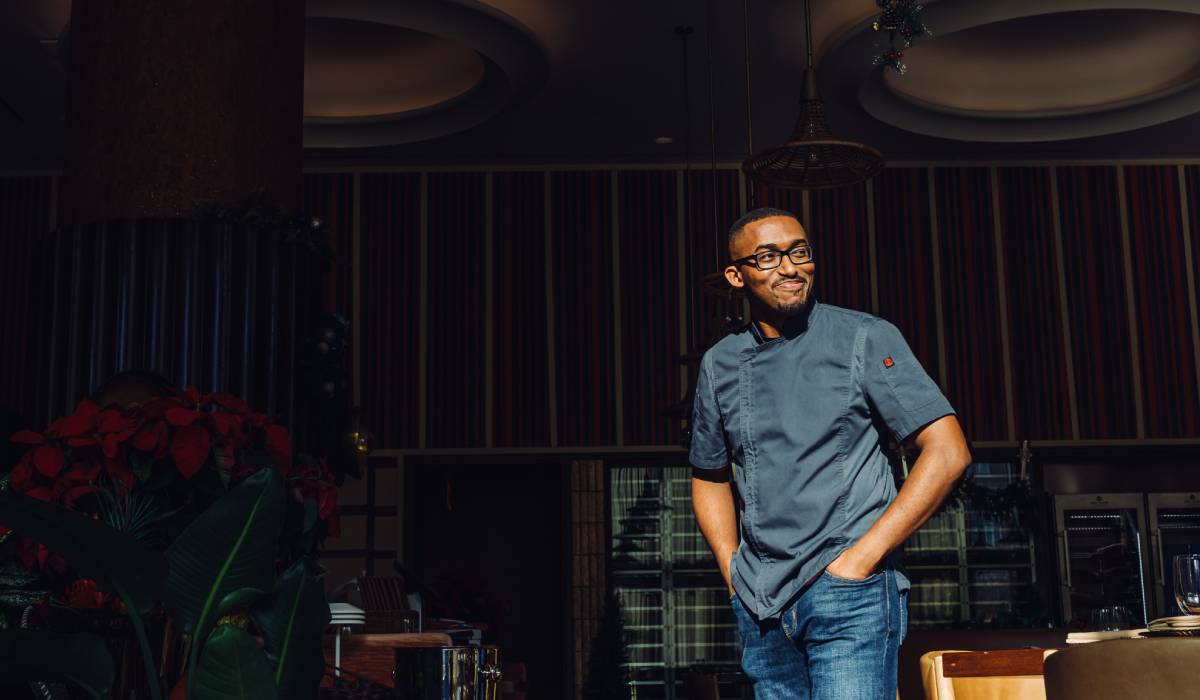
Anthony Jones
Season 23
Current role / title: Executive Chef, Marcus DC
Anthony Jones is having a breakout year. Even before competing on the most recent season of Top Chef: Carolinas in Charlotte, which premiered in March 2026, Jones received a national recognition that many chefs only dream of.
Back in late January, he remembers exercising in the gym at work when a friend texted him, “Congrats on the nom,” to which Jones replied, “What are you talking about?” His friend told him to go check Instagram—and that’s how Jones found out he was named a 2026 James Beard Award semifinalist for Emerging Chef.
He stepped out of the room, feeling emotional. “That was a groundbreaking moment for me,” he says. “I will say, the gym is not the right place to shed tears. It makes everyone in the room with you feel a little uncomfortable,” he laughs. “So I had to pop out of there real quick. But I was beyond happy.”
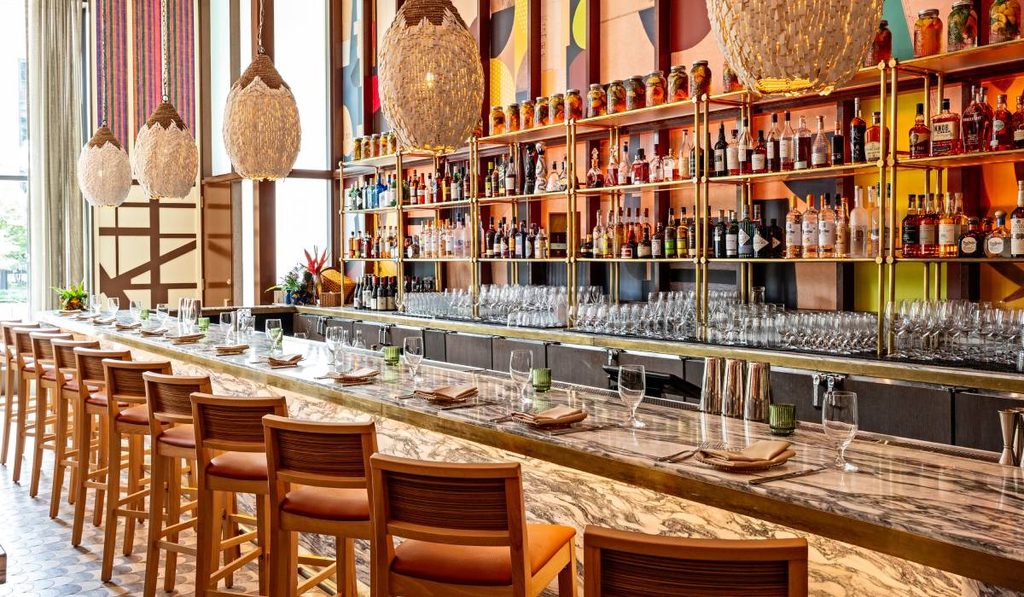
Before filming season 23 of Top Chef, Jones was helping celebrity chef Marcus Samuelsson launch Marcus DC inside The Morrow Hotel, which officially opened in D.C.’s Union Market District on June 3, 2025. Samuelsson tapped Jones to lead the kitchen as executive chef, where he has crafted a menu that reflects his upbringing in nearby Sunderland, Maryland, close to Chesapeake Bay.
Mel’s Crab Rice, a mainstay on the Marcus DC menu, is a great example. Jones grew up cracking crabs with his family, and turned that childhood memory into one of DC’s most sought-after dishes: a mix of crunchy shallots, okra, obe, and uni-infused béarnaise.
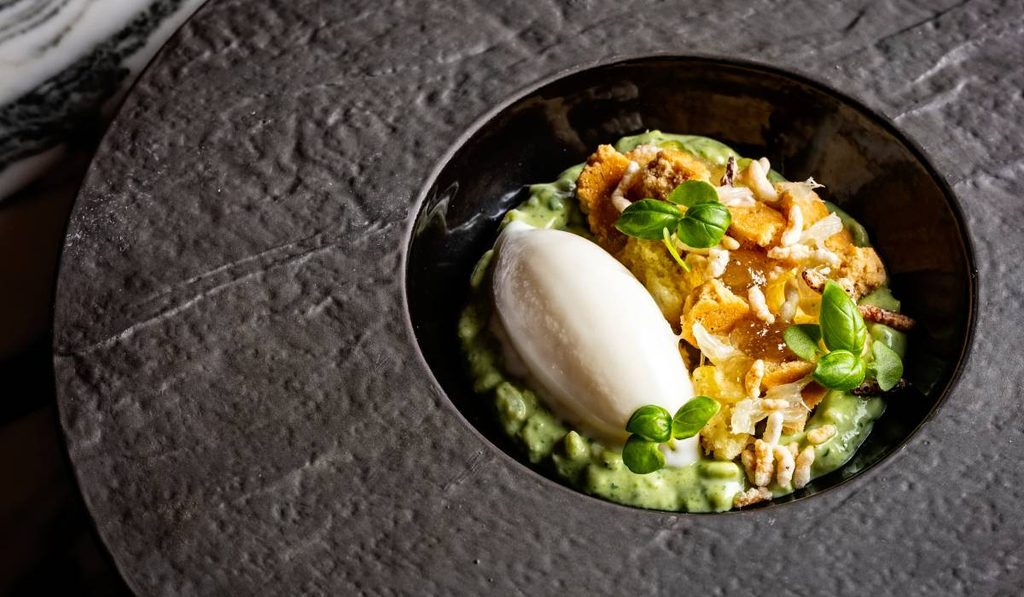
In creating Mel’s Crab Rice, Jones “wanted to bring together my current self and my past self,” he says, but also acknowledges how much the dish has evolved over time. “I think we’re on iteration 12 or 13 of the rice since when we opened, because … I’m always adding something to it, changing up a step, adding in different flavor enhancers or ingredients, because I feel as though there’s always room for dishes to improve. For me, that’s the goal, especially for one of those dishes that has become iconic at the restaurant.”
All his work has clearly paid off. Mel’s Crab Rice was named one of the best dishes in the city by The Washington Post, which also named Marcus DC a top five restaurant in the D.C. area. Jones was also awarded “Rising Chef” of the year by Eater DC last year.
At Marcus DC, Jones offers a distinct narrative of the Black diaspora, with a culinary style inspired by African and Latin flavors. He takes pride in leading Marcus DC’s kitchen as a Black, gay chef, and is intentional about emphasizing Black and brown culture in both a global and local perspective. He says, “It’s when we can be comfortable about who we are, and express our creativity through our identity, when the ingredients become bigger than the dish—it becomes joy on the plate.”
Growing up, a moment that sparked joy for Jones—and even became the inspiration for pursuing a culinary career—came while watching the original Japanese Iron Chef. “That was the ‘eureka moment’ to where it changed my whole viewpoint of food, to see it prepared that way, with that much skill and craft behind it, and tension behind it,” he says. “And then to see the judges—the amount of respect that they had for the food—that changed my whole viewpoint.”
It feels serendipitous, then, for Jones to get the call inviting him to be a competitor on a cooking competition TV show years later, stepping into the same kind of high-pressure arena that first made him see food as something worthy of that level of drama and respect. The initial call from Food Network led to Jones becoming a Chopped Champion in 2022, followed by finishing in the top 10 of Top Chef four years later.
On Top Chef, Jones says, one thing that may surprise viewers is that the clock isn’t TV magic. “Those timeframes are very real. If they say 30, they mean 30; there’s no extra added bonus,” he explains. That means chefs must be brutally honest about what they can actually execute in that set amount of time. “If you know on your best day it would take you an hour to pull it off 100 percent, and the parameters you have 45 minutes,” he says, “do not try it. Those extra 15 minutes aren’t coming from anywhere … Do something that’s easier to execute.”
Every second the clock ticks, chefs are forced to make a series of tiny, high-stakes calculations: “Some restaurants will buy, for instance, whole heads of garlic, but when you’re competing, every second matters, and the last thing you want to do is waste a minute or two minutes peeling garlic,” he adds. The same goes for stock-making and sauce work that normally take hours; on TV he reaches for pressure cookers or multiple pots on high heat to concentrate flavor fast. That realism now helps shape how he writes menus and runs service at Marcus DC.
When asked if there was a dish he cooked on Top Chef that inspired a similar dish at Marcus DC, Jones points to the dehydration challenge in episode 5, “Cut and Dry,” where chefs were tasked with elevating a dish featuring at least one self-dehydrated component. Jones presented the judges with a cured salmon with banga broth and dehydrated smoked oyster-infused rice, which they praised as exceptionally well-executed—earning him the win and immunity for the following week.
“That was one of those rare opportunities where we had so much time; normally in an elimination challenge, you never have that much time, so I was able to really cook how I like to cook at the restaurant,” Jones says. “I made paste and flavoring agents, and I was able to dehydrate chilies and spices and aromatics, along with the paste, and smoked oyster. The end result of the dish was so amazing, was so flavorful, and had so much depth to it; I didn’t have to take any shortcuts, I could cook 100 percent how I like to cook, and I ended up translating that dish over into one of the dishes on our tasting menu.”
At Marcus DC, Jones describes running a kitchen as a “team sport,” where his own talent doesn’t mean much if his cooks can’t also execute at the highest level. It’s a mindset that also informs how he delegates; he purposefully gives his team tasks they already excel at because “it brings them joy.” Yet he also deliberately challenges them with projects they’re not as comfortable with and stands beside them in a supportive role during the process.
“If you mess it up, I’m here. We’ll fix it together, we’ll figure it out,” he tells them. “I would rather you learn now, be comfortable and be a better cook and a better chef going forward, versus never getting the opportunity, [then] you land somewhere else in your next job, and this is just thrust upon you, and you have no idea what’s going on, and then you’re blindsided.”
This mentorship mentality also shows up in the way Jones teaches his crew about the importance of checklists and count sheets by showing them the “why” behind the system. Cooks track how many portions of a dish sell on Monday versus Friday, then see how that data informs ordering decisions, waste, and cash flow. For Jones, that’s part of the job: sending people out of his kitchen more well-rounded than when they arrived.
“It doesn’t matter how good I am, it honestly doesn’t, because I’m not cooking every dish. I physically can’t cook every dish, so my team has to be at a certain level where they can execute my vision to at least 80 percent, and if they can’t do that, then it’s up to me to get them there,” he says. “But then also, once they get there, say, ‘OK, how can we progress further?’”
When asked what excites him most about where the restaurant industry is heading broadly, Jones says he’s energized by how much more open the dining world feels right now. “There’s less borders and boundaries on food and cuisine, people are a lot more open-minded now,” he says. “You don’t have to be French or Italian or European” to be considered fine dining; chefs can “zero in and focus on a certain region and cuisine of Vietnam or Filipino-style cuisine, or a certain region of Japan, or South America.”
He points to Central and South American cuisine as “killing it,” thanks to older preservation techniques and food systems that feel “more natural, more clean.” Some of the best bites he’s had in recent years came on a trip to Mexico, and he’s already eyeing Canada and beyond. The appeal, he says, is that “there’s just so much to explore, and you’ll never learn everything. You’ll never be able to try and taste everything—and that for me is an amazing part of the journey.”
Gabriel Pascuzzi
Season 18
Current role / title: Chef and Owner, Hey Luigi Cocktail Bar and Bistecca Wood Fire Steakhouse
Since appearing on Top Chef, what has been the most meaningful evolution in your cooking, leadership style, or approach to running a restaurant?
Refining my approach to mentoring the next generation of cooks by finding new ways to spark their excitement for cooking.
What lesson from your time on Top Chef still influences the decisions you make in the kitchen today?
Planning execution around your equipment and space and ensuring the menu aligns with the capabilities of the operation. This is huge for off-site catering, as well as when designing new restaurants.
Looking ahead, what project, menu idea, or part of your culinary mission are you most excited for diners to experience next?
I am working with Urban Restaurant Group in Oregon to start a classic Brasserie in Portland.
What advice would you give to aspiring Top Chef contestants?
Practice. Don’t walk in thinking it’s a normal kitchen. The clock moves fast. Learn to use pressure cookers and faster techniques, and always ask yourself: Can I cut a corner without sacrificing flavor or quality? Speed is your friend.
Monique Feybesse
Season 19
Current role / title: Chef and Owner, Tarts de Feybesse
Since appearing on Top Chef, what has been the most meaningful evolution in your cooking, leadership style, or approach to running a restaurant?
I have grown much more confident in my ability and willingness to jump at different opportunities. Being open and interested to various paths in the culinary world is exciting especially not being constrained to certain perimeters. Not only am I interested in growth within my company, it is also the continuing journey of self-discovery which plays a pivotal role in how I lead today. If I am inspired, our team feels that. You lead by example.
What lesson from your time on Top Chef still influences the decisions you make in the kitchen today?
Teamwork! If you are a great teammate, you can do so much more within any challenge thrown at you. If you have people who actually want to work with you, it is a game changer in confidence and trust within the group. Everything just comes out so much better when you all drink the koolaid together.
Looking ahead, what project, menu idea, or part of your culinary mission are you most excited for diners to experience next?
I am most excited about showcasing Filipino ingredients and techniques in a more profound way instead of relying on “tradition”. It really does speak to me and to show it in a way where people can be excited with not so known flavors is so much fun. Unexpected and welcomed.
What advice would you give to aspiring Top Chef contestants?
Come ready. Because everyone else will. Do not underestimate ANYONE. It is anyone’s game. Your connections and relationships will last you a lifetime.
Charbel Hayek
Top Chef Middle East & North Africa (MENA) Season 5 and Top Chef: World All-Stars
Current role / title: Executive Chef and Partner, Ladyhawk (West Hollywood), Laya (Hollywood), Ilya (San Clemente), and Yamashiro (Miami)
Since appearing on Top Chef, what has been the most meaningful evolution in your cooking, leadership style, or approach to running a restaurant?
Top Chef has shaped me tremendously, not just as a chef, but as a leader. Every Quickfire and every challenge pushed me to think differently, adapt quickly, and trust my instincts. It taught me as much about myself as it did about cooking.
One of the most valuable lessons was learning how to make decisions under pressure. Sometimes you rush, and one simple decision can cost you the entire challenge. The restaurant business is very similar. As a chef and a leader, you need that same sense of urgency, but you also need to know when to slow down and make the right decision. Finding that balance between speed and intention has been one of the biggest evolutions in my leadership style.
At the end of the day, a great restaurant is about great food and great hospitality. We serve people, and our job is to make them feel special and give them a reason to come back.
Maybe the most meaningful lesson I took from Top Chef was learning to accept feedback. As chefs, we take pride in what we create, but sometimes that pride can stop you from listening, and once you stop listening, you stop improving. On Top Chef, your work is evaluated openly and honestly, and that experience teaches humility, resilience, and discipline. It reminds you that no matter how much experience you have, you are always a student of the craft. There is always something new to learn.
What lesson from your time on Top Chef still influences the decisions you make in the kitchen today?
One of the biggest lessons I learned from Top Chef is to always ask myself about the intention of my menu. Why am I cooking this dish? Why am I serving it? What is the story behind it?
While on Top Chef, I learned that making something delicious isn’t always enough. A dish needs intention and point of view. It needs to make sense—where you are, what you’re trying to say, and why those ingredients belong together.
That lesson still influences how I build menus today. Of course, food is about flavor and presentation, but it’s also a major part of the identity of a restaurant. I think about seasonality, the progression of the menu, how the dishes work together, and whether every dish has a place that belongs in that concept. I don’t want to put something on a menu just because it’s good. It has to have a purpose to be there.
Looking ahead, what project, menu idea, or part of your culinary mission are you most excited for diners to experience next?
One of the most beautiful things about cooking to me is that the excitement never fades. Whether I’m creating a new seasonal dish at one of my existing restaurants, like Ladyhawk, or opening an entirely new concept, I still feel that same eagerness and passion to create.
Every restaurant is special and unique in its own way, and each one tells a different part of my story, my upbringing, my experiences, the places I’ve been, and how I’ve evolved as a chef.
This fall, I’m especially excited to open Laya Café in Santa Monica, a Mediterranean café concept that shows a more casual side of my cooking while still being rooted in the flavors, culture, and hospitality that have shaped me.
For me, it’s never just about opening another restaurant or putting another dish on a menu. It’s about continuing to tell my story through food, while creating places that guests can create their own memories and special experiences to and want to come back to.
What advice would you give to aspiring Top Chef contestants?
I always say go into Top Chef knowing exactly who you are as a chef but also be ready to be a student and learn and adapt every single day.
You should never cook what you think appeals to the judges, but cook something that represents you, and have a reason behind every decision you make. At the same time, listen carefully to feedback and don’t let your pride get in the way. Sometimes the hardest feedback is the feedback that makes you a better chef.
Most importantly, don’t let the clock make you forget how to cook. The pressure will push you to move faster and make decisions in seconds, but you still need to trust your instincts, taste your food, and remember why you’re competing.
And remember one thing: Every Top Chef winner was once standing exactly where you are. They believed they could do it, worked hard, and made it happen. If they could achieve it, so can you.
Joe Sasto
Season 15 (Top Chef: Colorado) and Season 17 All-Stars
Current Role / Title: Chef, Entrepreneur, Author, and Co-Founder of Tantos
Since appearing on Top Chef, what has been the most meaningful evolution in your cooking, leadership style, or approach to running a restaurant?
The biggest evolution has been learning that creativity is only one part of success. Early in my career, I was focused almost entirely on the food. Today, I think just as much about building teams, creating opportunities for others, and developing brands that can reach people beyond the walls of a restaurant. Whether it’s through my cookbook, television work, teaching, or launching Tantos, I’ve learned that great hospitality starts with empowering the people around you. My cooking has become more personal as well. Instead of trying to impress, I’m focused on creating experiences that tell a story, spark curiosity, and bring people together.
What lesson from your time on Top Chef still influences the decisions you make in the kitchen today?
Top Chef taught me to trust my instincts. In the competition, there isn’t time to overthink every decision. You have to rely on your training, your palate, and your point of view. That lesson still guides me today. The dishes that resonate most are often the ones that feel authentic rather than calculated. It also reinforced the importance of adaptability. Things rarely go exactly as planned in a kitchen, and being able to pivot while maintaining quality is one of the most valuable skills a chef can develop.
Looking ahead, what project, menu idea, or part of your culinary mission are you most excited for diners to experience next?
I’m excited about continuing to challenge expectations around Italian food and ingredients. Through my cookbook, new product development, and upcoming culinary collaborations, I’m finding ways to make Italian cooking more approachable while still honoring its traditions. I’m especially excited about growing Tantos and introducing people to a completely new way to enjoy pasta. At the same time, I’m continuing to create immersive dining experiences that connect guests more directly to the stories, techniques, and ingredients behind the food.
What advice would you give to aspiring Top Chef contestants?
Know who you are before you walk into the competition. The chefs who stand out aren’t necessarily the ones making the most complicated food, they’re the ones with the clearest point of view. Trust your instincts, stay adaptable, and don’t try to cook what you think the judges want. Cook the food that represents you. And remember that the relationships you build with fellow chefs can be just as valuable as the competition itself.