TGI Fridays’ first domestic development agreement in more than a decade might be just the beginning.
The casual-dining chain signed a deal with Bliss Bites LLC—led by led by owner and managing director Vinod Chand—to open five restaurants across New York State over the next three years. The franchisee also acquired an existing TGI Fridays in Central Islip, bringing his planned portfolio to six locations.
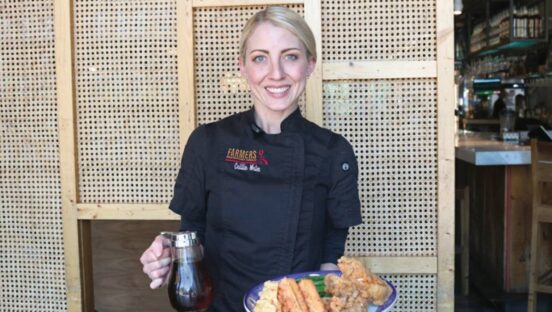
But COO Ashley Kirkley says the company has already approved additional franchise partners and is negotiating agreements across several states. The goal is to establish a pipeline of multiunit operators capable of bringing the brand back to markets where its presence has diminished.
“We have multiple opportunities in six to seven states that look very similar to Vinod’s deal,” Kirkley says.
The company expects additional agreements to be announced in the coming weeks. Its preliminary domestic development outlook calls for approximately 20 restaurant openings over the next two to three years.
That would represent an important reversal for a chain that has spent several years contracting.
TGI Fridays shuttered a net of U.S. 212 restaurants between 2023 and 2025, leaving 69 franchised U.S. locations, according to the company’s website. Its global footprint stands at nearly 400 restaurants.
The renewed domestic expansion effort is part of TGI Fridays’ 1-2-3 Strategic Vision, which calls for more than 1,000 restaurants and $2 billion in annual revenue by 2030.
However, Kirkley says the company is being deliberate in how it recruits franchisees and structures development commitments.
Most prospective agreements involve five to 10 restaurants, with provisions allowing operators to expand their territories if their initial locations perform successfully. The company is also evaluating nontraditional opportunities in hotels, airports, and travel stations.
“The biggest thing for us is franchise health. So making sure that the franchisees that we are currently signing on feel comfortable with the deal as well as the opportunity in the areas that they’re in,” Kirkley says.
The Bliss Bites agreement brings TGI Fridays back to its roots in New York, where the brand opened its first restaurant on Manhattan’s Upper East Side in 1965.
Chand is a hospitality veteran with more than 35 years of experience. His existing business interests include hotels and other properties throughout New York.
Kirkley first met Chand in January, when the two had lunch at a TGI Fridays location on Long Island. She says he was drawn to the company’s work to improve its core menu and restore the hospitality experience associated with the brand.
But the decision to move forward involved more than his financial qualifications and development experience.
Kirkley visited one of Chand’s newly opened hotels and stayed overnight without informing him she would be there. She wanted to see firsthand how his employees treated guests and whether the property’s service standards matched the expectations TGI Fridays has for its franchise partners.
“And if he puts that much love into that property, he’s going to put that much love into our TGI Fridays as well,” she says.
The New York agreement could eventually expand geographically. Kirkley says Chand’s territory includes the boroughs and North Jersey, with the potential to add more restaurants after fulfilling the initial five-unit commitment.
Existing franchisees are showing renewed interest in the company’s direction, too.
The chain’s largest domestic franchise group operates 23 restaurants. Several operators are investing in restaurant refreshes and local marketing, and the company has welcomed three new franchise partners over the past 12 months, including operators who acquired existing locations from retiring franchisees.
Kirkley says the company’s recent global business conference helped build enthusiasm among franchisees, who received a closer look at upcoming restaurant improvements and the brand’s development plans.
In April, the company began a weekly program examining individual menu items, service practices, and restaurant conditions. Instead of immediately introducing an assortment of new products, the company prioritized improving the food and experiences guests already associated with TGI Fridays.
The initiative had reached its 23rd week at the time of Kirkley’s interview.
Early feedback has been encouraging. Kirkley says the brand’s Google review ratings have climbed from approximately 4.0 in April to 4.6.
The company is also preparing a new restaurant prototype with updated decor, a sleeker appearance, and more opportunities for guests to interact with their surroundings.
TGI Fridays is exploring entertainment features such as electric shuffleboards, which are already being tested in international markets. The goal is to encourage longer visits and make its bar-forward restaurants appealing to a wider range of customers.
Some features will also cater to guests who enjoy sharing their dining experiences on social media.
“We’re very big on making sure that all of our guests, whether they’re 21 to 50 or 12, have the opportunity to engage with something within the restaurant,” Kirkley says.
Operational improvements extend to employee training.
TGI Fridays hired a global trainer to oversee training initiatives across its international system and support upcoming restaurant openings. The company also expanded its Masters of Service program, which brings general managers and restaurant managers together for weekly discussions focused on service and hospitality.
The company is also monitoring customer reviews, service scores, and guest feedback across several channels, including Google, TripAdvisor, and Toast.
Off-premises performance is another priority. Kirkley says third-party delivery service providers now account for approximately 30 percent of the business.
But her primary measure of progress is guest traffic.
Sales growth can result from higher prices or larger checks without necessarily indicating that more people are visiting. TGI Fridays wants evidence that customers are returning more frequently and choosing the chain for repeat occasions.
Kirkley sees domestic performance as essential to the brand’s international ambitions. The chain operates in 41 countries, and its U.S. restaurants provide an important foundation for the identity it carries overseas.
The company’s long-term goals may be ambitious, but Kirkley says the work inside individual restaurants will determine whether TGI Fridays can sustain its comeback.
“We’re focused on creating the energy and hospitality and the celebration,” Kirkley says. “We want to be known as a restaurant of celebration. I celebrated my 16th, 18th and 21st birthday at TGI Fridays in New Jersey. And that was a great thing for me, but I want everybody to feel that. That’s an opportunity that not everybody gets.”