The most memorable restaurant experiences often are rooted in recognition, in the small signals that tell a guest this place knows them.
“The best hospitality is personal,” says Brittany Baldwin, CMO of Upward Projects, a Phoenix-based restaurant group. “It’s a great bartender who remembers what you drink or a great server who knows that you like to sit on the patio.”
That idea is central to Upward Projects, which specializes in adapting historically significant or architecturally distinctive buildings for new restaurant lives. Its largest and most prominent flagship, Postino, began in a historic 1940s-era Arizona post office.
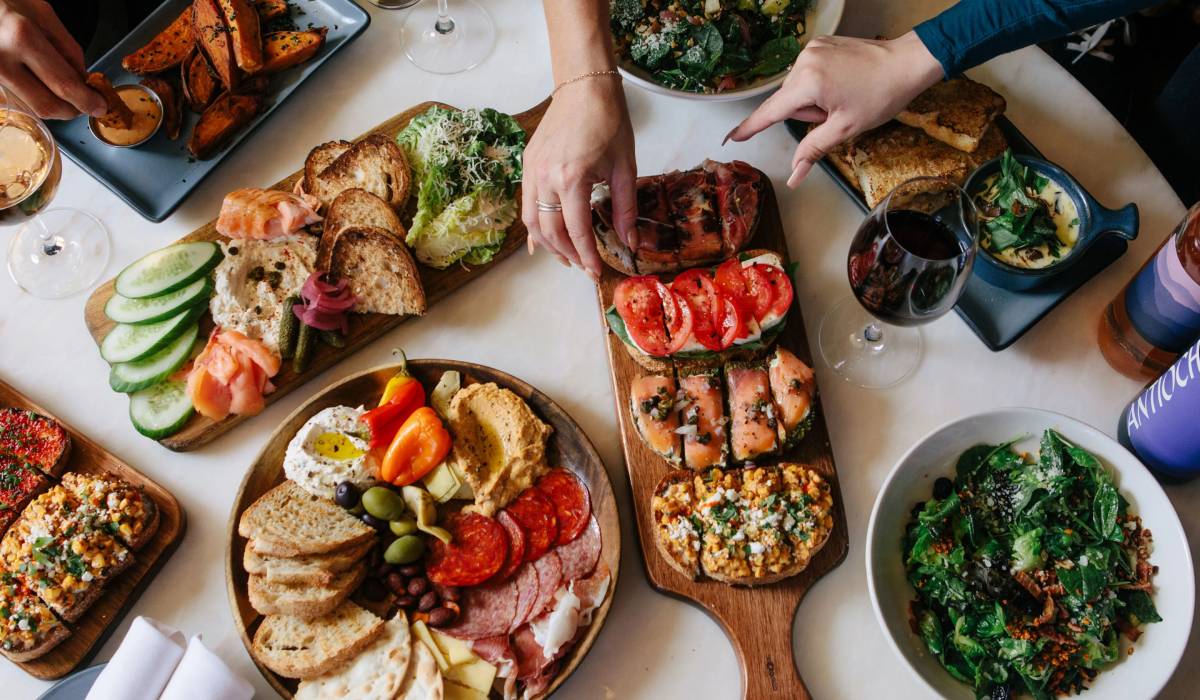
Twenty-five years later, the neighborhood wine bar chain has more than 30 locations across seven states, built around wine spanning a bevy of varietals, beer and cocktails, and an eclectic menu of snacks, soups, salads, paninis, and a dozen kinds of bruschetta.
This summer, Postino marked its 25th anniversary with the Postino Pass, a complimentary, digital-first membership program intended to make that recognition more scalable without making it feel automated. A short, playful “get to know you” quiz informs spontaneous, tailored treats delivered directly to members’ phone wallets. The pass lives in that digital wallet and unlocks surprises throughout the year, from wine-bottle upgrades to special bites.
The distinction is intentional. Rather than relying on the familiar “spend X, get Y” equation, Postino organizes the program around occasions and lifestyles. Think date nights, catching up with friends, trying something new, or bringing a dog to the patio. The goal is to reflect the ways people actually use the brand, rather than force them into a points-driven transaction.
“It’s not about loyalty,” Baldwin says. “It’s about personalization and hospitality.”
For Baldwin, that framing responds to a wider paradox facing restaurants. Brands have access to an expanding pool of signals—mobile data, credit card data, behavioral information from demographic and data-platform partners. The opportunity is not simply to use those inputs to accelerate a transaction or amplify a promotion, but to make an interaction more considerate. It also arrives as guests show renewed interest in experiences that feel “analog, handcrafted, and one-of-one” rather than algorithmically produced.
“There’s a fundamental difference between broadcasting mass marketing and a one-to-one interaction where you say, ‘Okay, this person likes Chardonnay. We’re going to talk to them about a new Chardonnay Blanc they’d really enjoy exploring and tell them the story behind that winery,’” Baldwin says. “That feels hospitable. That makes someone feel seen.”
The Postino Pass is the outcome of a broader two-year digital transformation led by director of digital Ellie Ovsenik. Before that work, the company’s view of a guest was fragmented. Different systems held different angles, complicating efforts to create a coherent engagement strategy.
“We knew we needed to have a tech stack that was modular and would scale with us,” Baldwin says. “But we also needed to have a central view of the guest, versus different angles of the guest through disparate systems.”
Postino rebuilt toward that central view with a more integrated tech stack. A centralized CRM consolidated guest data and enabled more sophisticated lifecycle communications, while an offer-management platform organized the perks and benefits behind Postino Pass. Guest analytics tools gave the team a clearer read on behavior, visit frequency, and lifetime value, including the traits of its most engaged guests. At the restaurant level, the system connects with handheld POS devices, so when a guest presents a wallet pass, applicable perks appear directly on the server’s screen, eliminating manual codes.
The group had already tested parts of the strategy through its wine club. Baldwin says that for years, the program—then called Wine Cult—was constrained by older technology that made the experience cumbersome for both guests and teams. In its next iteration, it became the Postino Bottle Club, a monthly program with greater flexibility, including in-restaurant bottle redemption and the ability for members to cash in when it best suits them.
The redesign also became an early proving ground, requiring guest migration, retraining, and change-management work before the pass reached a broader audience. That experience sharpened a critical lesson: a thoughtful technology stack still fails if it creates friction for the people delivering hospitality.
“We can create the shiniest, coolest program,” Baldwin says, “but if it’s not in the service of our teams, if they’re not excited about it and they don’t understand how it works, then it’s a fail.”
That’s why Postino started the pass with its field teams. Employees received perks, training, and time to use the experience before it reached guests in a market. Operations leaders monitored downloads, redemptions, and training completion at each restaurant, using internal adoption as a gate for launch. The team deliberately waited for sufficient participation, Baldwin says, with the mindset that a server’s uncertainty about the program would do more damage than a delayed debut.
Ultimately, Baldwin’s measure of success is that the technology recedes into the background. Guests should not be thinking about data, a wallet pass, or the system behind an offer. They should simply feel that the restaurant knows them.
“The data isn’t the goal,” Baldwin says. “Better hospitality is the goal. Data simply helps us be more thoughtful.”