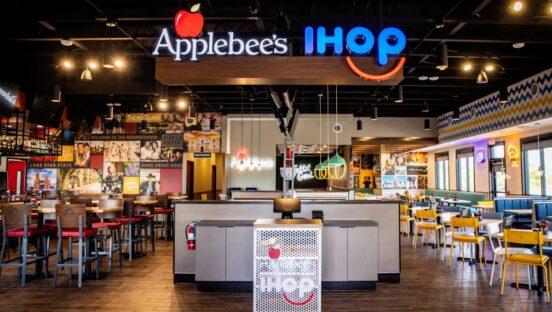
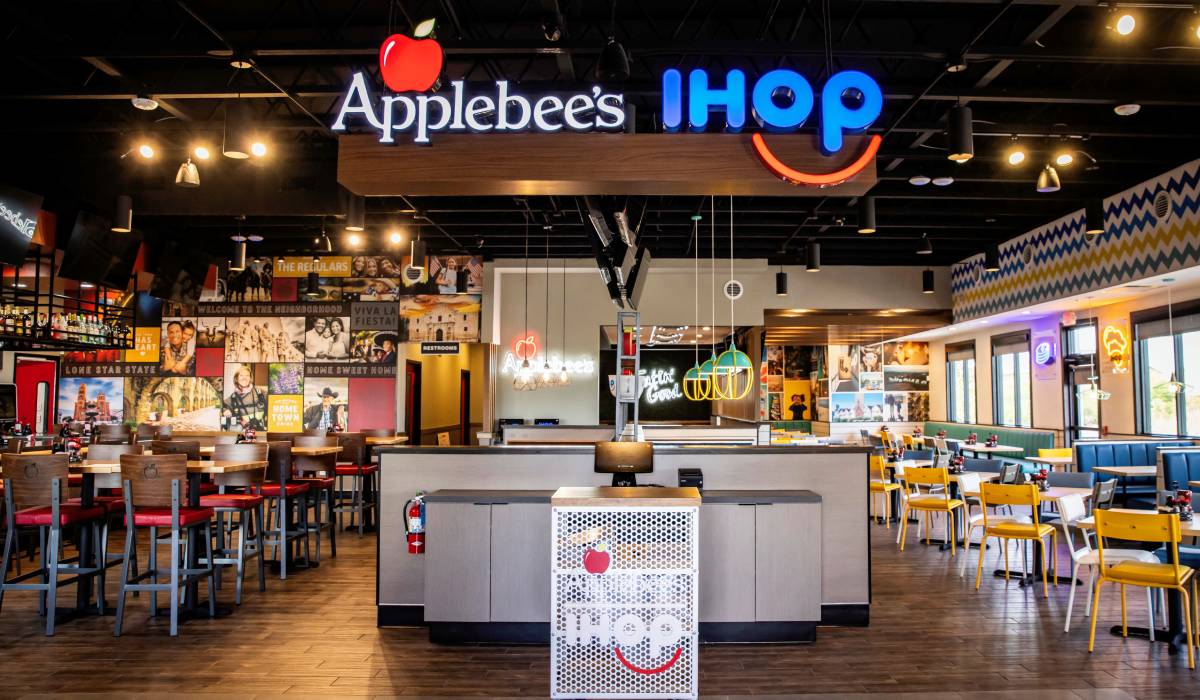
John Peyton, sitting at Dine Brands HQ in Pasadena, California, was some 8,000 miles away from where the first dual-branded IHOP and Applebee’s sprung up in Dubai. Being so far from corporate, he said, meant the franchisee could veer from the playbook and ask for permission later.
Eagles Landing International Restaurants did just that as it designed and opened half a dozen “before we were even paying attention,” Peyton recalled. But, approval aside, he kept hearing positive things. A couple popped up in Mexico and Peyton hopped on a plane.
“[I] came back and said to the team, this is a really big idea,” he said. “And we opened the first one a year ago, April.”
Speaking at the Barclays Annual Global Consumer Staples Conference, Peyton walked through the much-talked-about model that’s provided Dine Brands a growth lane it hasn’t appreciated in a while. That overseas inspiration-turned-stateside debut outside San Antonio, has 45 open today, with 80 projected by year’s end. All but three of them are conversions, meaning the original restaurant (Applebee’s or IHOP) added the second.
With close to 50 active, Dine Brands has been able to paint a steady economic impact for franchisees. It costs about $1 million to tack on (a bit more going from IHOP to Applebee’s thanks to the addition of a bar). And stores are seeing consistent revenue growth of 1.5 to 2.5X original gains. So, a $2 million IHOP becomes a $3 million combo.
The most compelling note for Peyton, he explained, is nobody walked into HQ and suggested putting an IHOP and Applebee’s in the same building, “because no one [would] ever think of that.”
Yet when examine the tickets, two-thirds are items from both sides of the menu. In the morning, combo restaurants are selling pancakes and ribs. In the evening, they’re moving omelets and skillets.
“And so, guests that are experiencing it are actually taking advantage of it,” Peyton said. “We’re giving them something they didn’t know they wanted. And we’ve got a very robust pipeline for next year as well.” He noted most combo stores are now serving Bloody Marys.
Peyton was asked about the deliberation process going forward. As leases come up, or franchisee agreements spin, Dine Brands is hosting conversations 12–24 months in advance on what might be next. It covers the typical queries. Should the store move? Has the market changed over the decades? But now, if operators do elect to continue (94 percent of Dine Brands’ agreements are renewed, Peyton said), the notion of a renovation or combo could enter the debate.
It’s likely that will happen more often in the years to come. Dine Brands projects 900 opportunities for IHOP-Applebee’s combo stores in the U.S. alone. Of those, 450 are new builds and 450 conversions (an existing brand adding the other).
When the company devised the 900 number, Peyton said, as you’d imagine, it built a big model in Pasadena with ample assumptions, market conditions, population growth, and traffic factors. It ran figures with the idea it wouldn’t approve any restaurant in danger of cannibalizing another. If Dine Brands had, for instance, done so with 5–10 percent impact, it would have come up with 1,600 potential outlets instead of 900 (IHOP ended Q2 with 1,813 restaurants and Applebee’s 1,557).
In other terms, a lot of franchisees can’t covert. An operator running an Applebee’s 2 miles from an IHOP won’t receive approval to do so.
Dine Brands isn’t lacking for internal interest, however. Regarding this note, Peyton said things have not unfolded exactly as expected. The company’s initial hypothesis was it would need to build a batch to prove out the concept and demonstrate numbers for franchisees. Then, it would likely have had to subsidize and incentive early operators.
The initial store, in Seguin, was a partnership with long-time IHOP franchisee Ramzi Hakim Group, an entity with 30-plus locations. They previously purchased the local Applebee’s franchisee. So, Ramzi Hakim Group owned the market for both and could put a conversion anywhere it wanted to, avoiding the cannibalization fear. Dine Brands subsidized the first, as expected, and when it opened, flew down Applebee’s and IHOP franchisees who were typical developers for the area. Those 20 or so operators witnessed the combo opening in action.
“And our book of business built right from there,” Peyton said.
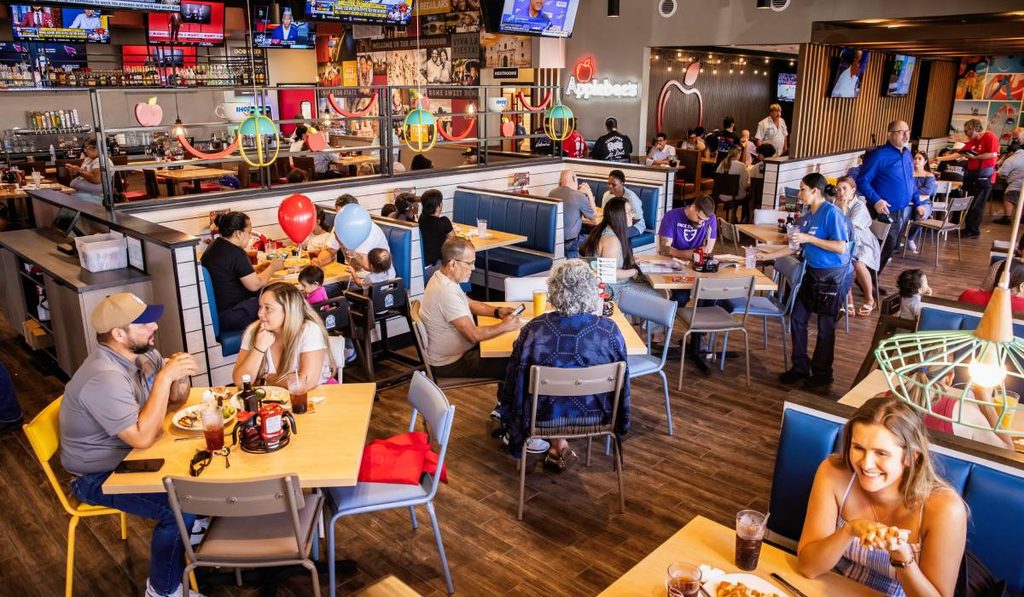
In the end, Dine Brands didn’t have to fund 10 dual stores and the incentive to franchisees, regarding key numbers, “has been steadily declining.”
What’s been particularly impressive, Peyton added, is the franchisees who showed up for the debut are restaurateurs with “30 or 40 years” of experience and its largest franchisees, Flynn Group, Doherty Enterprises, and Thrive Restaurant Group. It’s a group (Flynn is the biggest franchisee in the world) directing hundreds—collectively thousands—of stores through multiple brands. “They saw the concept and they said, ‘there’s something going on here,’” Peyton said. “And they signed up.”
Simply, it has not been a hard sell for Dine Brands. There are operators, of course, among the 400 or so franchisees in the system, who continue to monitor progress. But the pipeline is plenty deep.
So much so, in fact, CFO Vance Chang said, Dine Brands today is in the process of creating a 2027 FDD for the Applebee’s-IHOP opportunity. By the time it releases, the company should have 100 open, Peyton said, with 30–40 live for nine to 12 months and, thus, providing enough stats to illustrate what’s been going on. “And we’ll bring in fresh franchisees that will probably tackle the open markets,” he said.
As this unfolds, Dine Brands continues to fine-tune the operational model. It’s working on a 2.0 combo approach based upon early lessons. Peyton said the company got it “80 percent right out of the gate.” Some key observations, though, were IHOP franchisees needed additional help running a bar. So, Dine Brands has been sending teams in to coach and rethought training. Operators, he said, viewed the bar as another cost center and didn’t think as much about the role of the bartender and how they build culture and welcome regulars. Servers had to learn how to sell drinks and deliver hospitality, too.
With Applebee’s, no matter how much corporate cautioned, Peyton said, it was difficult to anticipate what takes place at an IHOP on Saturday and Sunday mornings. “And the volume of work there is a surprise to them,” he said.
“And what’s surprising about it is everything at IHOP is scratch, right?” Peyton continued. “So, it’s all real eggs. There’s nothing formula there. And with breakfast, as you all know, it’s all scratch and almost everything is customer. Everybody does something to their eggs differently than how it’s listed on the menu or their packages.”
For Applebee’s kitchen staff, it was a whole new way of working.
Dine Brands is strengthening training based upon the hurdles. Additionally, it’s picked up insights around equipment configuration, like where a flat top might be relative to a fryer. “All sorts of tweaks going forward,” Peyton said.
If you haven’t visited an IHOP-Applebee’s combo, he explained, it’s like a casual-dining reimagining of the co-brand rush QSR ignited decades ago. Only here, it’s more of a daypart play to make locations relevant throughout.
There’s a combined menu that stretches from breakfast through late night and it mirrors, somewhat, the nostalgic Northeast diners where somebody can sit from dawn until break while ordering everything from ribs to pie and eggs.
The menu tints from blue to red as dayparts progress.
Staff is cross trained and customers sit wherever they want and order from either chain. “When other brands in the past have tried duals, like KFC and things like that, they’re competing dayparts,” Peyton said. “So, what’s compelling about this is Dine Brands just happens to own the premier AM and premier PM brand.”
IHOP, since its 1958 founding, has been trying to address dinner, he said. This gave IHOP franchisees a solution they’ve been searching for since Dwight D. Eisenhower was president.
Applebee’s gets to unlock a morning daypart and revenue opportunity it’s typically closed for. “In terms of making the box more productive 24/7—that’s exactly what it does,” Peyton said.
The solo picture (for both)
Outside of Dine Brands’ dual-branded vision, Peyton began his presentation by talking about IHOP and the chain’s recent mobility. It outperformed Black Box benchmarks in sales and traffic in Q2 for the third consecutive period. Same-store sales lifted 1.5 percent on nearly flat transactions.
Off-premises grew 3.5 percent (fifth straight period of gains) and catering saw comps jump 22 percent, up from 16 percent the previous quarter.
IHOP’s average Google rating inched to 4 out of 5 from 3.9 a year ago and the review base grew by more than fourfold. Table turns improved 4 minutes compared to the end of 2025.
Lawrence Kim, previously chief innovation officer at Yum! Brands, stepped into the brand president role in January 2025 following the retirement of Jay Johns. He added chief commercial officer of Dine Brands in June.
Peyton said the company was attracted to Kim’s Taco Bell pedigree as well as roots in marketing, digital, and social.
A vital shift for IHOP was, as difficult as it might be to believe, the legacy chain never had an everyday value menu before rolling a five-day option last year for $6 (sometimes $7). That expanded to seven days in 2026.
It’s evolved, Peyton said, into the anchor of IHOP’s barbell strategy and drove traffic into units. Then, once customers arrive, it can merchandise higher-end, higher-margin, more exciting offers.
Peyton said franchisees got on board for a couple of reasons. One was Dine Brands touts a committee structure where corporate and franchisees work together. Neither IHOP nor Applebee’s has the latitude to put promotions in place operators don’t agree with when it comes to price point or margin.
Also, franchisees saw how sales grew from the five-day option. Once proved, going to seven days wasn’t a wide mental gap to cover.
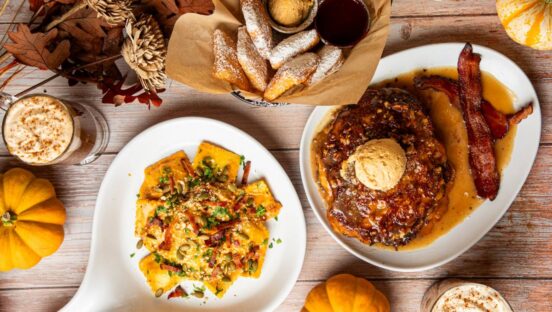
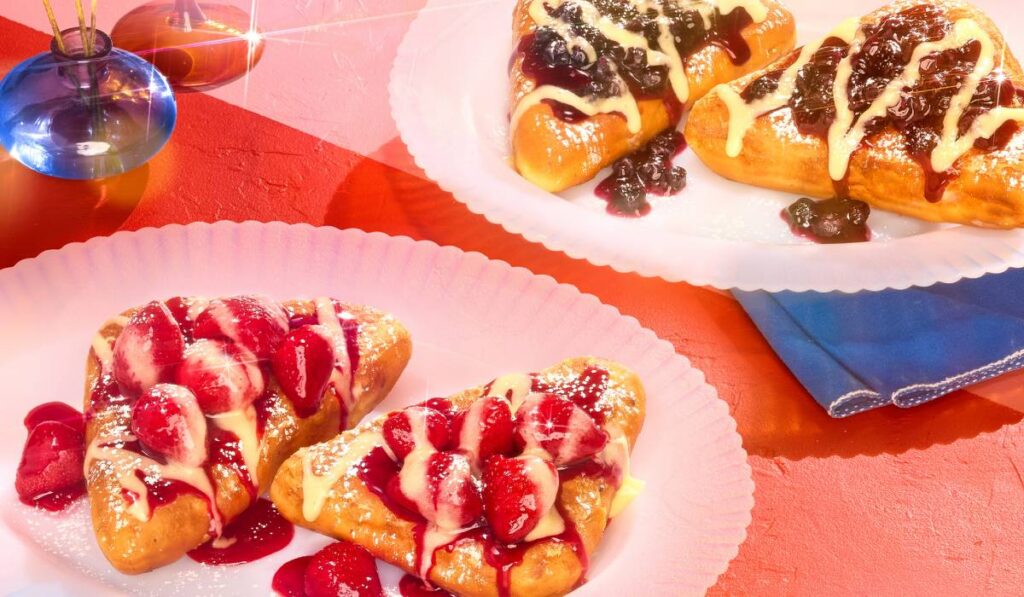
Kim amplified menu innovation, too, with launches like Dubai Pancakes and the recent return of heavily requested Stuffed French Toast.
“And them, finally, what he’s really good at is digital and social, and we’re seeing a big difference there in terms of the way IHOP is playing and appearing in culture on a much more regular basis,” Peyton said.
Building on the off-premises corner, before COVID, business outside the four walls ranged from 6–8 percent for each brand. Today, it’s closer to 22–23 percent. The opportunity became consistent, Peyton said. IHOP and Applebee’s joined an off-premises consideration set they merely glanced at before.
Dine Brands has had to learn on the job. Its 3,000 or so locations weren’t built to have a quarter of sales flow outside the side door. “So, there’s a lot of MacGyvering back of house in terms of process and procedures in order to carve out the space to effectively do off-prem,” Peyton said.
The chains reexamined packaging. What was mildly important at 7 or 8 percent became critical beyond appearance and into function. Dine Brands learned how to work with DoorDash and Uber Eats and figure out how to promote products on third-party sites.
And with catering, IHOP appreciated double-digit quarter-over-quarter growth since relaunching last quarter. Peyton said there’s a technology component with catering-enabled websites. But all of its catering packaging is new and can accommodate larger portions. “It’s been driving off-prem,” he said. “And we think there’s a lot more upside.”
A focus on Applebee’s
In Peyton’s view (he is also president of Applebee’s), the biggest whitespace for the brand starts with stepping back and viewing the landscape. There’s a shakeout taking place in casual dining, he said. You see it with some peers “fading a little bit” and others surging. Applebee’s, meanwhile, has hovered around the same-store sales line (–1.8 percent in Q2), which Peyton said was “OK, but not good enough.”
It shouldn’t come as a surprise what’s been circled. Like IHOP, Applebee’s spent the past year-and-a-half investing in menu innovation. And not only individual items, but rather, categories and platforms that are fresh and can be built out.
You’ll see those, Peyton said, begin to roll out in the first quarter of 2027. Applebee’s implemented more new food in 2026 than it has in years because it stuffed that pipeline, such as Q1’s O-M-Cheese Burger that arrives on a melted bed of cheese.
Next, Applebee’s focused on its marketing message. When Peyton arrived a couple of years ago, the chain didn’t have an in-house social media team. “Now, we’ve got a bunch of kids sitting in a room that are doing social all day long and monitoring everything,” he said.
One example being, going back, the brand wasn’t conducting regular social listening. A few weeks ago, though, someone the chain didn’t know posted they hadn’t eaten Applebee’s in 10 years and never would. Normally, Peyton said, Applebee’s wouldn’t have even realized that happened.
This time, however, the social team spotted it, sent her a gift card, and the person went to Applebee’s and did a mea culpa post. It garnered 2.5 million views.
“It’s been the food, social, and bricks and mortar,” Peyton said.
The last renovation cycle for Applebee’s was 2020. Due to COVID, corporate excused it because franchisees, understandably, espoused other concerns. But it means they’re 14 years behind the last one.
Applebee’s is catching up. The chain is two years into a refresh and franchisees will complete about a third of the portfolio this year on the way to half in 2027.
And the final point is core operations, or managers making sure they’re in the front, not back, of the house talking to guests, as well as improving off-premises accuracy.