Modernizing a dining program is often described in terms of what needs to change, whether that be new menus, new ingredients, new techniques, new presentations, or new ways of engaging today’s guest. Working as an executive chef at the landmark Biltmore Hotel has taught me that there is another, equally important question to ask: What shouldn’t we change?
At a property with a century of stories embedded in its walls, dining traditions are not simply items on a menu. They become part of the hotel’s identity. Guests return not only for the cuisine, but for how an experience makes them feel – and often that feeling is tied to something they have enjoyed for years or hope to share with the next generation, which creates a different responsibility for a chef.
Rather than working with a blank canvas, we are stewards of something that existed before us, while also being responsible for making it relevant to the guest sitting in front of us today. The challenge is knowing the difference between something that needs updating, and something that is timeless.
Protect the Ritual, Evolve the Details
The Biltmore’s Traditional Afternoon Tea is a perfect example. It’s truly a ritual and is about much more than tea and pastries. There is a certain anticipation that begins before the first cup is poured: the setting, the service, the tiers of savory and sweet offerings, the pacing and, most importantly, the invitation to slow down.
At a time when so much of the modern dining experience has become faster, more casual and increasingly driven by convenience, there is something contemporary about asking guests to sit, linger and be present. That is why I believe some traditions should not be modernized simply for the sake of modernization.
The menu can evolve with the seasons, ingredients can be refined, presentation can be updated, and techniques can become more sophisticated. However, the essence of the experience – the ritual, the sense of occasion, the gracious pace – deserves to remain, because we do not preserve a tradition by freezing it in time, but by understanding what makes it worth returning to.
Start With Who You’re Feeding
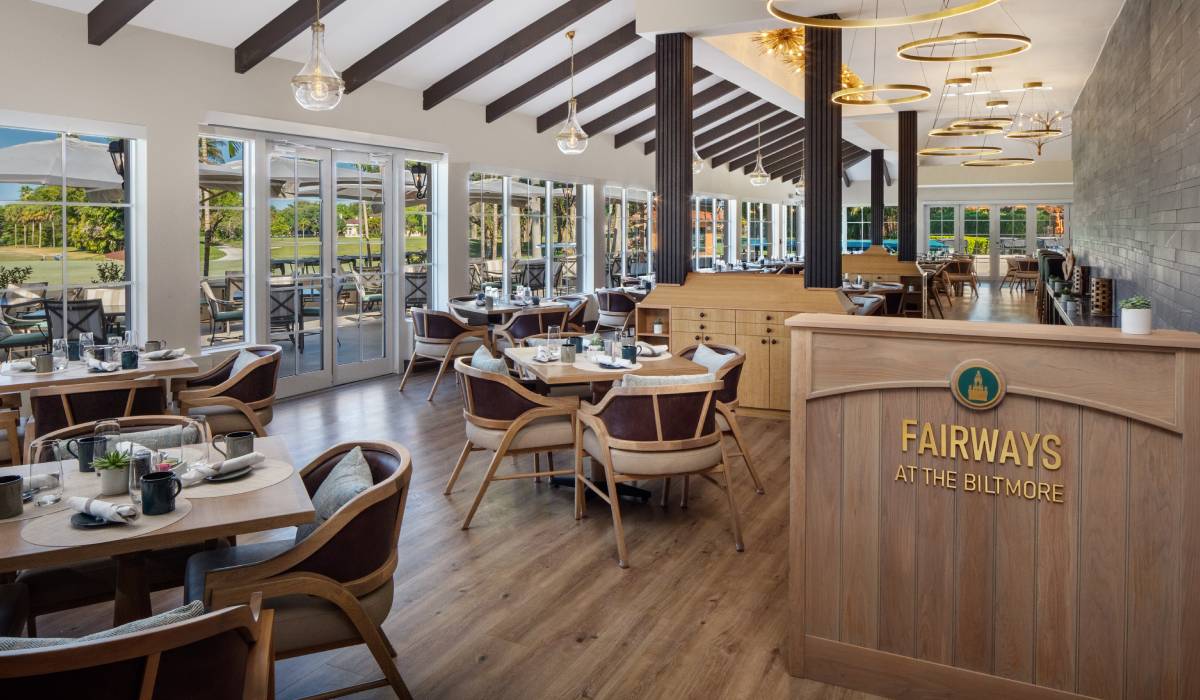
That same philosophy helps clarify where change is necessary, and Fairways, our classic golf club restaurant and bar, presents a very different opportunity. Its location connects it naturally to the golf course, but today’s leisure traveler does not define a resort dining experience only by the activity happening outside.
One guest might have just finished 18 holes, while another spent the morning at the pool. A family may simply be looking for a relaxed lunch or dinner in a beautiful setting. A local guest may know the course intimately, while someone else has never picked up a club. The restaurant needs to welcome all of them.
For Fairways, modernization means looking beyond the traditional definition of a golf restaurant and creating an experience that feels connected to its surroundings without being limited by them. The food should be approachable but thoughtfully prepared, the beverage program engaging, and the atmosphere inviting enough that guests want to stay awhile. The menu should also reflect how people dine while traveling today – whether casually, socially, after an activity, or simply because they have found a place they enjoy.
In other words, the question isn’t, “What should we put on the menu?” The better question is, “Who are we feeding, and what do we want them to experience when they sit down?”
Use Heritage as a Guide, Not a Constraint
That distinction is particularly important in a landmark hotel, where heritage should inform the dining experience without becoming a constraint that keeps it from evolving.
I think of it much like cooking itself. The best dishes depend on knowing which ingredients are essential and which can change. Remove the wrong element and you lose the character of the dish, but change the right one and you can create something that feels entirely fresh while still being recognizable.
Similarly, landmark hotel dining should not operate like a museum, where every experience is preserved exactly as it was, nor should it reinvent itself in pursuit of every emerging trend.
This thinking can also be applied more broadly. Any restaurant that has built something guests return to, whether it’s a signature dish people ask for by name or a tradition that has lasted decades, must strike the same balance between what to keep and what to change. Before updating something guests have come to expect, it is worth understanding why they keep coming back, and protecting that part while everything around it evolves.
For us, Afternoon Tea represents the value of protecting a ritual that continues to resonate, while Fairways presents an opportunity to reconsider what a golf restaurant can be for today’s traveler. They may seem like very different approaches, but to me they are expressions of the same philosophy.
As chefs, we have the privilege of creating what comes next. At a landmark property, we also have the responsibility to recognize what came before us and to understand that sometimes the most meaningful decision we can make is not to change something at all. The art of modernizing a landmark isn’t knowing what to erase, but knowing what deserves to remain.
Steven Hall is Director of Culinary Operations & Executive Chef at The Biltmore Hotel Miami-Coral Gables, a National Historic Landmark celebrating its centennial in 2026. A Certified Executive Chef (CEC) with more than 20 years in luxury hotel, resort and high-volume culinary operations, he has led teams of more than 200 associates and held senior roles with JW Marriott, Loews Hotels & Resorts and Crescent Hotels & Resorts.