Chili’s isn’t advertising heavily right now or riding the buzz of a specific, viral campaign. And yet, it just posted same-store sales growth of 10.1 percent in Q1 at company units, bringing its two-year stack to 31.5 percent and three-year view around 52 percent. It marked Chili’s 22nd consecutive run of comps growth and included 6.4 percent of traffic, which is 19.5 percent higher over the past two calendars and 28 percent across three.
Chili’s has outpaced casual dining as a category, per Black Box, for 12 straight periods (by 750 basis points this quarter).
And Q2 is off to a mid-single-digit same-store sales rate despite facing a year-ago lap of 8.6 percent that built on a 31.4 percent result from 2025. “Some have repeatedly said we cannot possibly continue to comp on top of big comp numbers,” CEO Kevin Hochman noted Wednesday during Brinker’s earnings. “Our Q1 result putting three consecutive years of double-digit comp growth, driven by traffic gains provides ample support that our strategy is sustainable even with a difficult macro.”
MORE: How Chili’s Took Control of the Cultural Conversation Again
Returning to the first reality, alongside onlookers wondering if this can last, Chili’s often gets asked about underlying drivers. Truth is, Hochman said, the answer is boring.
“I wish it was more of a Merlin act,” he explained, “where we pulled out some LTO and it did it. It’s really just about the fundamentals of casual dining—delivering great everyday value for our guests and then executing like crazy.”
No wizardry involved. While it’s renovated 60 percent of the menu (more is underway) and spent north of $100 million on facility improvements during this surge, Chili’s today is doing one particular thing consistently well, Hochman said. “We continue to convert new guests into regular guests,” he noted.
“I don’t think it’s anything different than what we’ve been doing year after year now,” Hochman explained of quarter-to-date performance. “So, this idea of marketing brings them in and then ops brings them back.”
At Chili’s investor day (more on that here), the company shared “token data” of having “anywhere from 3 million to 3.5 million new tokens” come in and then tracking frequency as a monthly cohort to see if the brand maintains while it also recruits new diners. While it doesn’t have numbers for Q1 yet in terms of repeat from fresh guests, Hochman said, there’s no reason to believe that’s tapering off based on current guest metrics.
Chili’s had “some big swings” that helped, too. Its July Margarita of the Month (Bombshell Marg, with dragonfruit, strawberry purée, and house-made sour) resonated. The chain’s Big Crispy Chicken sandwich advertising, directly comparing to QSR at $10.99, kept rolling. And there were some culture pops with Rhoback and golf merch designed to “get into the zeitgeist and be relevant with our guests,” Hochman said.
But again, it’s this marriage of buzz with what awaits in-store that’s turning trial into something lasting, with average-unit volumes rising from $3 million to $5 million since the comeback ignited. Chili’s Google score hit an all-time high of 4.3 in the quarter.
“Our experience improvements, combined with our everyday value leadership position us to win trips,” Hochman said. “A sustainable traffic-led strategy based on the fundamentals of why a consumer goes out to eat will continue to win the day.”
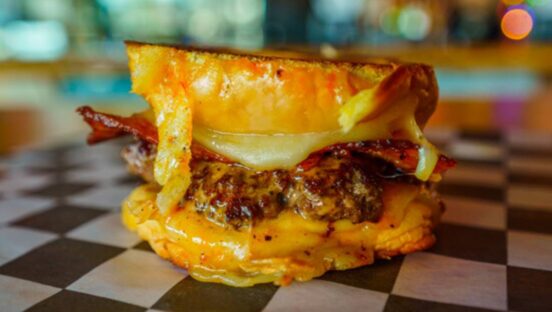
The Big Crispy sandwich was a key driver of incremental traffic throughout Q1. Since launching in April, customers responded to the size and quality of the sandwich, Hochman said, as well as the price certainty for a large and complete meal.
Chili’s sold about 55 per day in Q4 and kept that going to start fiscal 2027 (Brinker’s calendar rolls ahead of most, which are typically in Q3 2026 this time of year). Orders in the category climbed 175 percent since Chili’s surfaced six different variations.
It was selling about 20 per day before.
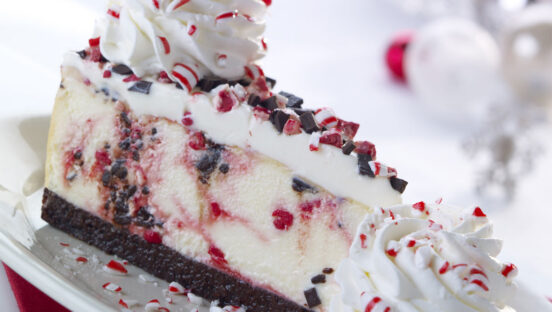
In addition to a continued focus on Big Crispy, Chili’s completed the upgrade of “several” lower-mixing menu items. Some changes include upgraded ice cream (Blue Bell), the addition of sausage as a protein it pasta, the return of cheesecake, and a rethought Kids Pepper Pals menu that tacked on ice cream floats, Shirley Temples, grilled chicken bites, cheese quesadillas, and a Mini Molten.
Pillar hospitality work isn’t done, either. Chili’s remains locked in on stripping friction out for employees and managers with help from its “North of 6” initiatives (where the brand taps operators earning $6 million-plus AUVs for best practices).
Q1 was the first period the brand removed GWAP—a metric tracking the percentage or frequency of guest complaints during service—from its GM bonus. But as planned, Hochman said, it didn’t slow experience improvements as the brand continues to stress habits it feels return the best ROI.
Operational aims focused on the fundamentals of making existing menu items more consistently. Hochman said there was another “full court press” on Big Crispy to ensure marketing had in-store backbone when customers showed up to try it. The chain stressed scratch-made batter and hand-breaking practices alongside ensuring filets head out freshly cooked, hot every time, Hochman said.
And with sausage joining pasta, Chili’s took the opportunity to retrain teams on this corner of the menu as well, which includes how to cook pasta for optimal taste and texture as well as retraining on all recipes.
Lastly, Chili’s rolled what it calls, “Staff to Grow Your Business.” With so much incremental traffic suddenly flowing, Hochman felt it was time to introduce “North of 6” staffing measures so restaurants could continue absorb volume without sacrificing experience.
As part of this, the company retrained above-restaurant leaders and managers on how to write better labor schedules.
“So, while our competitors were hard at work launching new items and new offers,” Hochman said, “we continue to keep operations focused on the fundamentals of delivering a great restaurant experience. We believe this focus will allow us to spend more time on what is important versus limited-time offers that will not have a lasting impact on the business.”
A focus on converting that traffic
Brinker EVP and CFO Mika Ware said Q1, and ongoing, traffic gains, prove Chili’s everyday value platform keeps landing with diners in today’s landscape, led by the Big Smasher, Big QP, and now, Big Crispy—all part of the brand’s “Beter Than Fast Food” campaign that drills down on QSR juxtaposition.
Meanwhile, though, it’s working on increasing throughput, which would release the valve for some of this trial.
Hochman said Chili’s saw a slight decrease in ticket time recently, but nothing material enough to report. “But we feel very good about what’s happening,” he said.
One lever is those labor cards and productivity at peak mentioned earlier. Point 2 is Chili’s now has a quarterly rollout regarding the host stand. Hochman said it’s a large initiative for the brand because you can almost look at the spot as a point of sale on its own.
Four things occurred in Q1:
One, Chili’s reestablished talent standards for the host role as well as staffing appropriately for volume. Five years ago, Hochman said, there were a lot of Chili’s that didn’t even have a dedicated host. Presently, it’s talking about having three, sometimes four, in certain locations.
No. 2, the company trained on “Aces in Places.” That means defining multiple host stand roles. Hochman referred to them as “meter,” “seater,” and “greeter.”
And then, ensuring managers are on the floor when large parties arrive.
So, picture a bottleneck forming when eight or 12 customers open the doors and want to sit together. Chili’s is getting managers involved.
Thirdly, the brand retrained on its iPad service for the host stand; how to properly use the software with an end goal of halting false wait quotes.
“False waits” are a common occurrence in casual dining where, through improper preparation or a lack of labor scheduling, a restaurant gets back up. In turn, servers are pushed to put customers on “false waits.”
“We want zero false waits in our restaurants,” Hochman said, “meaning we want them quoted in the exact quote time that the system is quoting.”
All of these things are happening. By November or December, Hochman expects to see some tangible host stand progress.
Also, by calendar’s close, a new team member handheld interface should be live, which eliminates more than half of the tasks required in order to ingest an order from a table. That should help with ordering time.
In plain terms, Chili’s has a lot going on with throughput, including a crop of initiatives with to-go the brand hasn’t shared yet.
Chili’s overall has been on a path to eliminate distractions for managers. It wants leaders to worry less about hitting scores and more about behaviors. It implemented a simpler reporting structure around operational metrics to view on a daily basis. The hope being to focus on more important vitals—get to the fewer, bigger things faster, Hochman said.
The race to gain, and keep, share
Chili’s isn’t immune to what’s happening sector-wide. Hochman said there’s been some mix slippage (flat in the quarter with 3.7 percent price), which the brand feels reflects a guest facing discretionary pressure.
Yet this isn’t novel. Chili’s has talked about this in prior calls—what if trips do pull back because of external weights like gas prices, political uncertainty, etc.? “… That consumer,” Hochman said, “is going to pick places they trust and the stronger are going to get stronger. And the weaker are going to get weaker. I think that’s when you’re seeing with us growing market share and driven by traffic.”
Chili’s introduced the Big Crispy at $10.99 as a traffic-driving strategy for just this kind of dynamic. And it’s playing out as the brand hoped, Hochman said.
“We believe as long as we continue to improve food, service, and atmosphere, and make us an obvious choice for consumers who may be going out a little bit less, but they know they’re going to get a great value and a consistent experience, we believe we’re going to continue to grow market share to continue to win,” he said.
Ware said Chili’s 3 for Me, and specifically the $10.99 tier, is mixing around what it generally does, about 20–21 percent. Chili’s mix dipped from flat to slightly negative in October but traffic, he said, “has more than made up for that.”
Traffic presently is two-thirds of Chili’s same-store sales, and accelerating. “We’re seeing those guests maybe do a little check management in alcohol and desserts,” Ware said. “But we’re seeing more guests come to Chili’s as that’s where they think the affordable choice is. That’s really working out for us.”
Hochman elaborated on what’s anchoring Chili’s marketing wins. When he came over from Yum! Brands, bringing CMO George Felix, they took modern marketing techniques into casual dining. QSR, he said, tends to have more social media impressions. Chili’s ignored that precedent. It carried over a direct social approach that began to feed itself as customers showed up and replicated what they saw online.
About two-and-a-half years ag, when the cheese pull ignited chatter, customers came hoping to recreate the experience. But if Chili’s didn’t work on fostering a cleaner, more consistent restaurant environment, Hochman said, he isn’t sure the movement would have lasted more than a couple of weeks. And we wouldn’t be talking about this 30 months later.
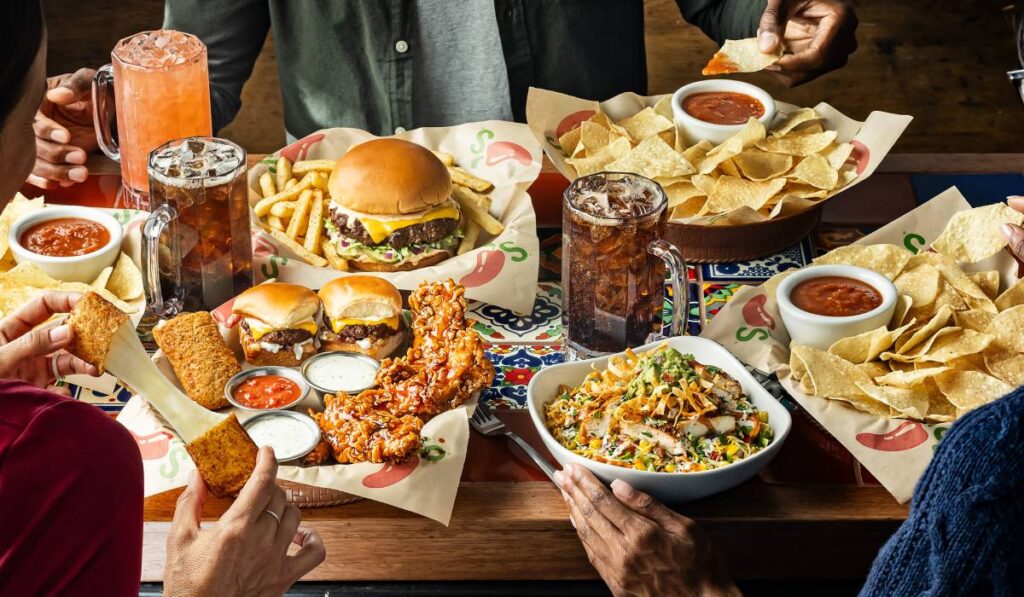
“It’s not just about going viral. I think lots of brands go viral. But what you saw with us, I think what you’re seeing with one of our competitors in casual dining that’s having some really good success with it, is you go into their restaurant, you go into our restaurant, you have a pretty good experience,” Hochman said.
“It feels like that social media experience that you saw online, and that causes you then to repost and share your experience and then that’s when it has that more [lasting appeal],” he added. “So, I would anticipate everybody trying to do this.”
A remodeled road ahead
Chili’s is also working through the early stages of a reimage program. It’s completed 20 thus far with another 13 under construction, and a total of 60–80 slated for fiscal 2027. The following year, the company expects to start upgrading 10 percent annually.
Although not a mature data set yet, Ware said, Brinker anticipates the cost of each remodel to be in the $500,000–$600,000 range with sales lift of roughly 3–5 percent. He noted Chili’s is happy with results to date and understands the value of preserving the “fun, welcoming, and relevant atmosphere that we’re known for.”
As the program continues, it will look for further cost efficiencies. Currently, about 20 percent of locations are expected to require the higher end of that range.
And Chili’s, as shared at investor day, is targeting 2–3 percent annual unit growth by fiscal 2029, supported by the AUV hike and improved economics. Ware said the company has visibility into a decade of development with more than 300 identified potential trade areas. This includes underpenetrated markets like Washington and the Pacific Northwest and infilling strongholds such as Texas and Florida. Also, expanding through high-growing secondary markets like the Carolinas as it leans into a small-town strategy.
Fiscal 2027 will remain modest (as have the past few years). But Ware said Chili’s already has “ample sites” picked as it prepares to accelerate.
Brinker opened a domestic Chili’s in Q1 alongside nine international to give it 1,630 total locations, including 51 Maggiano’s. Chili’s expects to open five to six U.S. stores and 25–30 international.