
The first year of Red Robin’s “North Star Plan” wrapped up in December as the burger chain closed Q4 with same-store sales declines of 2.7 percent and a net loss of $13.7 million (a significant improvement from a cut of $44.7 million in Q4 2022). Red Robin’s full-year comps improved 1.6 percent, year-over-year, and adjusted EBITDA lifted 33 percent to $68.9 million.
But the strategy was never designed to be framed through such a narrow window. CEO GJ Hart, a former Texas Roadhouse, Torchy’s Tacos, and CPK executive, spent two years on Red Robin’s board before joining the front lines in July 2022. He told investors on Thursday the chain was in “the second inning of a nine-inning game.” So far, it’s been a journey in foundational progress. Now, the next eight innings will center on opportunity.
Yet, without question, it’s been a wide-ranging start. Hart has long labeled Red Robin’s comeback as evolving toward an “operations-focused restaurant company.” In Q2, the brand revamped its market-partner compensation program for multi-unit operators. It’s a structure not unlike what’s practiced at brands like Texas Roadhouse or Outback in its early days, where people who lead restaurants also view themselves as owners. Red Robin rewards partners based on profits.
“… Our restaurant leaders are now incentivized to deliver strong financial results like never before,” Hart said, “with unlimited upside earning potential for themselves.”
It’s helped Red Robin recruit talent, he added, as well as foster better execution restaurant-to-restaurant. The multi-unit program went “exceedingly” well, Hart said. So much so, in fact, it informed the launch of a single-unit operator program that began when 2024 did. “The initial feedback has been positive,” Hart said. “And we are thrilled to align the entire organization around the unified goal of driving traffic and, ultimately, profit dollars.”
One case in action: management turnover improved 5 percent in 2023 compared to the prior year. Hart believes that’s a sign store-level employees are buying into Red Robin’s newfound direction.

Going back in time, one of the places Red Robin side-tracked was the labor model. In the summer of 2018, the company watched wait times and walkouts slam performance. Red Robin estimated at the time 75 percent of its loss in dine-in traffic stemmed from peak hours. Total ticket times out of the kitchen rose a minute on average and so did wait times. While that didn’t seem overly significant at first glance, added up at peak they triggered an alarming walkway rate (up 85 percent on weekends) during a time when no casual brand could afford to have guests reverse back out of the building.
Red Robin added bussers back and a dedicated expo, and also returned north of 250 dedicated kitchen managers. Servers became responsible for fewer tables and refocused on delivering hospitality versus trying to field the job of employees Red Robin shed to save on the labor line. The brand previously adopted a “team service system model” that required servers to bus as they went—an approach it admittedly didn’t execute on. In 2018, the company decided to eliminate bussers in a goal to cut $8 million and soften labor pressure from rising wage rates. Red Robin removed two positions and added table-cleaning duties to servers’ plates, as mentioned. It also asked hosts to handle carryout orders in addition to dine-in duties.
Often, the wait times came from tables simply not being cleaned instead of customers lingering. So guests walked in and observed cluttered tops without patrons.
Hart said recent investments have led to fewer “false waits,” increased cleanliness ratings, improved wait times, and, in sum, better hospitality.
Those operational bones served to support broad changes across Red Robin’s offerings. The chain rolled flat-top grills in Q2 it said delivered thicker, juicier, and more flavorful burgers. Hart previously noted these also return burger chefs to “real cooking,” while being simpler to execute. Red Robin moved away from wrapping burgers in wax paper and started placing them in a basket to highlight new plateware.
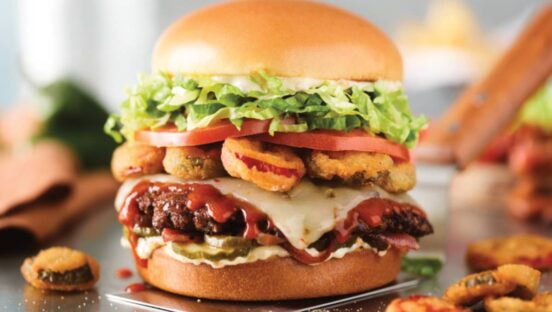
All of it was in anticipation of an October recipe revamp that touched each of Red Robin’s 20-plus burgers. The chain brought in fresh, hand-prepped ingredients like smashed avocado seasoned with chili flakes and a squeeze of fresh lime on a new Smashed Avocado N’ Bacon Burger, fresh grilled pineapple on its Banzai, juicy vine-ripened tomatoes, upgraded, higher-quality sauces, and more, served on a new brioche bun. The burger relaunch ran alongside the introduction of updated entrees (like Whiskey River BBQ Ribs), appetizers, beverages, and seasonal additions Hart said provide optionality within key menu categories capable of driving check.
In total, Red Robin enhanced about 85 percent of its menu. The bar was upgraded, too, layering in higher-quality, recognizable brands while also improving margarita mix with fresh lime juice and agave.
Hart said Red Robin recently surveyed its loyalty base and 52 percent indicated burgers were better, similar to Q3 results. Fifty-four percent agreed food quality had improved, up from 46 percent last quarter. Nearly 60 percent also noted service and hospitality was better, a noticeable climb from 48 percent at the end of Q3.
Although early, CFO Todd Wilson said there’s been a substantial jump in the number of new guests coming to Red Robin’s website. “To us, that’s a very encouraging sign of bringing new users back to Red Robin,” he said. “A lot of our marketing has been focused in new channels. And so that’s one of the markers we have been looking at in terms of data points that tells us we are on the right track beyond … the customer satisfaction.”
Hart added sentiment scores are even higher with new guests than they’ve been in the past. “That’s pretty encouraging that we are obviously striking a chord and we have seen repeat visits increase as well,” he said.
Red Robin partly funded its revamps on the cost and complexity side. Parallel to improvements, the chain looked at “numerous” non-guest-facing saving opportunities. The supply chain team, Hart said, found saving levers and ways to procure products from vendors of the same or better quality at a lower cost. An example—in Q4, the chain switched from using a frozen pre-vetted chicken breast to freshly hand-battering in-restaurant. That change alone represents nearly $5 million in annual savings, Hart said, while also offering a better-tasting product.
Red Robin expects a rollover benefit of $8 million from initiatives started in 2023 and to generate an additional $11 million of cost savings in 2024. “We continue to see opportunities in our supply chain, and we have launched initiatives to support our operators through upgrades to tools like theoretical food costs and hourly labor and overtime management,” Hart said.
Red Robin also made news earlier in 2023 when it decided to slice its virtual brands, which came on board in 2020 as a reaction to COVID and the evaporation of dine-in. “While this type of offering had a place at the time, multiple brands, product, and procedures created unnecessary complexity for our operators,” Hart said. “The economies of these virtual brands resulted in minimal profit, but creates a comparable restaurant sales headwind of 200 basis points to 250 basis points until we pass the anniversary of the elimination in the third quarter of 2024.”
It’s a straightforward pivot. Red Robin leveraged virtual brands to repurpose vacant kitchens. Once in-store guests returned, however, Hart felt they distracted focus from executing the Red Robin experience. So they got axed in July.
That decision, plus removing deep discounting marketing, is nominally to blame for Red Robin’s negative Q4 comp. There was a 2022 second-half combo meal deal that hit national media with a burger, bottomless side, and non-alcoholic beverage for $10—a 30–40 percent discount to retail prices. That spiked traffic and sales but created economics that were “quite penalizing,” to profitably, Hart said earlier. Red Robin’s approach today courts more sustainable and healthier gains through targeted offers and a barbell menu that inspires trial and then offers a chance to ladder up or return for more. Flipping was always going to create short-term burn.
Restaurant-level operating profit as a percentage of restaurant revenue was 12.2 percent in Q4, an increase of 90 basis points, year-over-year.

The message amplifies
It’s just about time for Red Robin to take its fresh approach into the limelight, both front-facing and digitally. Hart said the brand has focused particular attention to paid media and how it targets consumers. It shifted toward category-specific search strategies to capture the attention of diners seeking an experience like Red Robin.
Investments in earned media and targeted social marketing initiatives also positioned the chain in new consumer touchpoints, “fostering engagements with guests eager to see Red Robin’s resurgence and explore our latest menu offerings,” Hart said.
Red Robin linked with “Vanderpump Rules” star and bartender-by-trade Ariana Madix in October where she created a “Burgertini” cocktail with Red Robin’s new premium ingredients. She stirred up the drink on TikTok and Instagram for a two-minute spot.
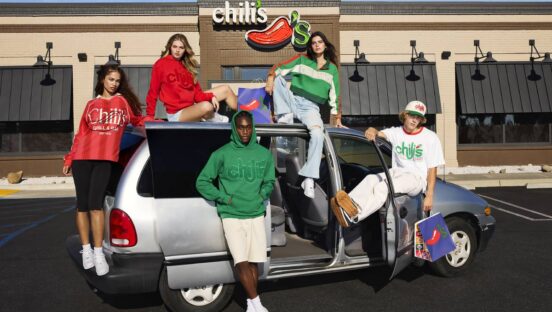
Hart said this generated more than 500,000 views in a “few days.” More recently, Red Robin struck a collaboration with Juicy Couture on a track suit that’s counted 800,000 social impressions to date, and rising. “And we quickly sold out of the track suits themselves,” Hart said.
The first stages of a larger initiative kicked off and will ramp up in Q2. Expect to see Red Robin on TV in six core markets. Wilson said Red Robin targeted certain channels, times of day, and events where it can “get the word out broadly.”
How Red Robin performs in those six DMAs will inform its strategy in the second half of the year. Yet the message holds: “really pushing to get the word out and get people to come back in to experience what we know by all the data is going to be a great experience,” Wilson said.
Overall, Red Robin invested about $24 million into the guest experience through food and labor. This coming year, Hart said, will be about ensuring guests are aware of that.
Starting in March and into Q3 (as Wilson shared), Red Robin will launch a new program that showcases the work its done and also to remind diners about some classic differentiators. For more than 54 years, Hart said, Red Robin has featured bottomless sides and other menu items, “but has not done a good job historically of telling people that.”
“Beginning in March that will change,” he said.
There are, in fact, north of 30 items on Red Robin’s menu that are “bottomless.” That includes steak fries (what most customers associate with the positioning). But it also covers “Freckled Lemonade [a blend of Minute Maid Lemonade and strawberries]” and Root Beer Floats. Guests can swap items between bottomless refills as well. They can order broccoli with a burger and then fries with a milkshake. “If you want another, the answer is yes,” Hart said.
“We want to ensure consumers know this core equity of Red Robin, a place for everyday value for your family.”
The brand will pour an incremental $3 million in selling expense to support the effort.
Next, Red Robin will unveil a new loyalty platform. The base today covers some 13 million members. In the past, however, it’s been more of a discount program than one that rewards users for loyalty. Hart said the goal will be to transform into a VIP-like experience that delivers more relevant messaging to members. Eventually, the approach will curate “a new generation of Red Robin ambassadors,” he explained.
This means transitioning to a points-based architecture that makes it easier for Red Robin’s most-loyal diners to earn rewards, which will then give them incentives to visit more often. The program should arrive in the middle of 2024, Hart said.
“It’s just not going to happen overnight,” he added of the overall turnaround. “But when I look at the progress our team members have made in 2023, pretty amazing. And so, while we referenced kind of the second, third inning in a baseball game, the point there is that there’s just so much upside for us as we get ourselves totally straightened out from some of the decisions of the past.”