Denny’s wants to bring a distinctly American dining experience to Europe, and its newest franchise partners believe Romania is the perfect place to start.
Honorius Prigoană has already seen what happens when an American casual-dining chain opens in the country. The Romanian entrepreneur helped introduce Chili’s to the market and navigated the complexities of international supply chains, European food regulations, and the challenge of establishing a restaurant brand in unfamiliar territory.
The response exceeded his expectations. The first Chili’s restaurant continues to attract weekend waitlists, and a second location is opening.
That experience convinced Prigoană that Romania has an appetite for another American restaurant institution. This time, he believes the opportunity could be even greater.
“Everyone in Romania was a fan of the ‘Dallas’ TV show, for example. They say if you look it up that it helped bring communism down when people saw the American lifestyle. Everyone wanted that,” Prigoană says. “So I do believe in this.”
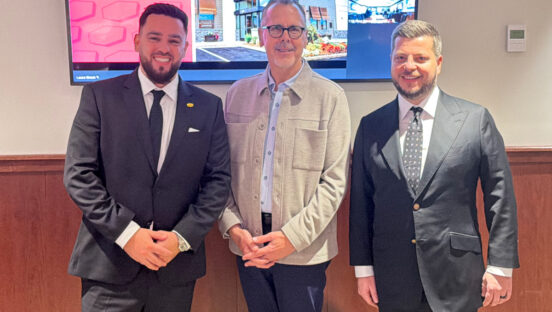
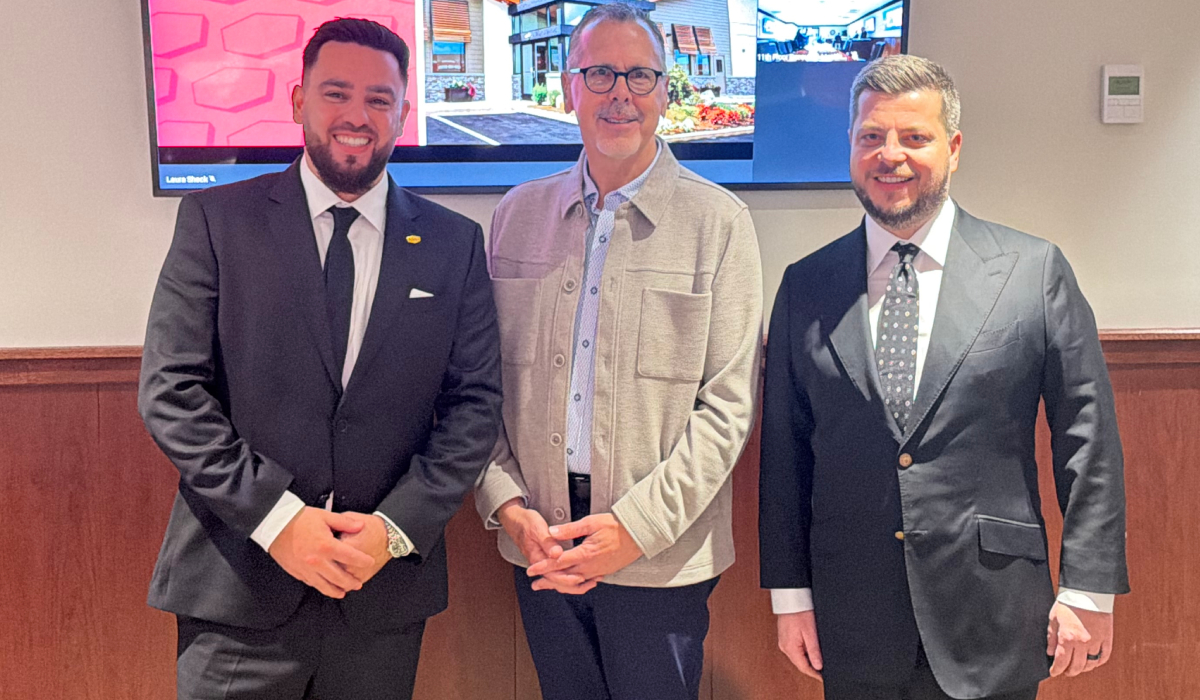
Prigoană and business partner Marian Ionescu have signed a franchise development agreement to open 10 Denny’s restaurants in Romania over the next seven years. The deal will establish Denny’s first presence in the European Union and potentially serve as a gateway to additional markets throughout Central and Eastern Europe.
The agreement is part of a renewed international expansion effort under Project Grand Slam, Denny’s enterprise strategy focused on restaurant performance, modernization, guest experience, and growth.
The company sees significant potential in markets where American QSR brands have already established strong followings but traditional American diners are largely absent.
Romania fits that description. McDonald’s, KFC, and Starbucks have established themselves in the country, but the full-service American diner experience is largely unfamiliar to local consumers.
Ionescu, who brings more than 15 years of marketing and social media experience working with major American brands in Romania, sees that unfamiliarity as an advantage.
“We want to bring the full experience of American diner in Romania,” Ionescu says. “So when [Romanians] enter in Denny’s, we want to feel like in America. We want to be like ‘Welcome to America,’ without the custom controls.”
The partners believe Denny’s extensive history, recognizable menu, and connection to American popular culture will resonate with Romanian customers.
Ionescu points to hash browns as an example of a familiar American food that is difficult to find in Romania. Many consumers have seen such dishes in movies and TV shows without having an opportunity to try them. The marketing strategy will capitalize on that recognition through social media, influencer partnerships, and the experience of visiting an American diner.
Pancakes could become an important attraction too. Ionescu sampled Denny’s food during multiple visits to the U.S., including a trip to the company’s HQ in Spartanburg, South Carolina, and came away impressed with the menu.
The franchise partners also want to preserve the authenticity of the American restaurant experience instead of extensively adapting the concept to local tastes. Prigoană followed a similar strategy with Chili’s, keeping its menu and operating standards closely aligned with the U.S. brand.
Executing that strategy required considerable work. Before opening Chili’s in Romania, his team spent approximately a year identifying local suppliers, testing ingredients, conducting audits, and securing approvals. Members of Brinker International’s U.S. supply chain team traveled to Romania several times during the process.
European food regulations added an extra layer of scrutiny and required the restaurant to establish a reliable supply chain that could consistently meet brand specifications.
The experience provided Prigoană with relationships and operational knowledge that he expects to make Denny’s introduction more efficient.
“Once you get the approvals and once you’re started in one European country, it’s like you are in all of them because a lot of the suppliers that we work with supply to all of our neighboring countries,” Prigoană says.
Denny’s is already discussing potential development opportunities in Poland and the Czech Republic, although its current agreement covers Romania.
Nader Talebzadeh, Denny’s vice president of international operations, says the company sees opportunities to introduce multiple restaurant formats throughout Europe. In addition to its traditional full-service diner, Denny’s is promoting coffeehouse and fast-casual concepts.
Talebzadeh believes the Romanian partnership can demonstrate how the brand translates across the European market and attract additional operators interested in establishing Denny’s in their countries.
Chief development officer Mark Burgess acknowledges that international expansion received insufficient attention during the previous decade. Denny’s maintained relationships with existing overseas franchisees but did not meaningfully extend its geographic reach.
“Project Grand Slam is about the evolution of the brand and elevating the experience and market share. So international, frankly, we haven’t leaned in enough over the past 10 years on the international market,” Burgess says.
The company is now placing greater resources behind international franchise recruitment and putting an emphasis on identifying operators who have the financial resources, local expertise, and infrastructure to support multiple restaurants.
Burgess says successful international development requires more than finding franchisees capable of running individual locations. Partners must understand distribution, supply chain logistics, and the requirements of operating an established American restaurant brand in a new country.
The Romanian partners showcased those capabilities during the franchise evaluation process.
Mark Levis, who works in new business development and franchise growth for Denny’s, first met Prigoană at a restaurant in the Fort Lauderdale, Florida, area in September.
The prospective franchisee’s enthusiasm made an immediate impression. The relationship progressed through the company’s evaluation process and a franchise orientation at its Spartanburg HQ.
Levis says the partners’ excitement, combined with their experience introducing American brands to Romania, made them an attractive fit for the company’s international ambitions.
Denny’s overseas business is already showing signs of stronger development activity. The company expects to open six or seven international restaurants in 2026 across a system spanning 13 countries.
One of its most active franchise partners is Grupo Comidas in Honduras, led by Luis Larach and his father, Roberto Larach. The group is opening three traditional Denny’s restaurants this year, each with seating for more than 200 guests. Talebzadeh says those restaurants are earning $2.7 million in AUV and proving the potential for the brand in international markets.
Mexico City is a major target as well. The company recently participated in a retail expansion summit and expo there and met prospective franchise developers from Mexico, Central America, and other Latin American markets. Denny’s also plans to attend an international franchise event in London in April 2027 and the International Franchise Expo in New York in June. The recruiting effort extends into Asia, India, and Oceania, where the company is evaluating potential partners.
Burgess says Denny’s hopes to bring multiple international development partners into the system over the next 12 to 18 months.
The initiative comes as the brand works to improve the performance of its existing U.S. restaurant base through Project Grand Slam. Restaurant closures and franchisee challenges have attracted attention domestically, but the company sees international development as an opportunity to expand its reach.
Its goal is to build a more consistent restaurant system and identify markets where qualified franchisees can establish sustainable businesses.
Romania could become an important test of that strategy.
“Through this attentional strategy, again as part of the Project Grand Slam, we will increase our national footprint. And just like with anything else in life, momentum gains momentum. And so that to me, this is just the tip of the spear for the European Union,” Burgess says.