
I cringe when I remember how I used to walk through the back of the house.
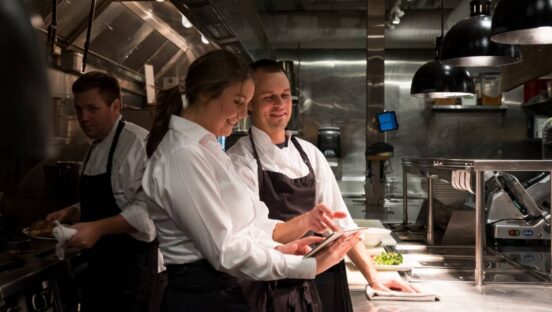
There is a specific moment I keep coming back to. A line cook on sauté during the rush. Head down. Fully in it. I would walk past, tap him on the shoulder, and say “good job” without breaking stride. Then I would keep moving.
At the time, I thought I was being a great leader. I was positive. I was showing I noticed him. I was making him feel good. And I was saving myself time so I could move on to whatever was next.
Looking back, I was doing none of those things. I was saying two of the emptiest words in leadership. And I was saying them so often that even I stopped meaning them.
The Two Words That Almost Feel Kind
Most leaders default to “good job” for reasons that sound noble.
We think it is positive instead of negative. We think it shows we care. We think it lets the person know they were noticed without having to stop what we are doing. On a busy shift or a full calendar, that feels like a win. Quick. Warm. Efficient.
But “good job” is not recognition. It is a filler phrase we use to feel like we are recognizing someone without doing the actual work of recognizing them.
And every time we say it without meaning, the value of it drops.
Why It Stops Working
The problem with “good job” is not that it is wrong. It is that it is vague. Vague praise creates three problems that leaders rarely see until it is too late.
The first is dilution. When you say the same two words to everyone, all day, every day, the phrase loses weight. The line cook you praised for perfect timing gets the same words as the server you praised for a clean apron. If everything is a good job, nothing is.
The second is confusion. The person you are praising does not know what you actually saw. Did you praise their speed? Their plating? The way they handled the ticket queue? Or did you just walk past and say something because you felt like you should? Without specifics, they cannot repeat what earned the recognition. They just know something was fine.
The third is the one that scares me most now. Sometimes “good job” accidentally validates the wrong thing.
The line cook you praised might have been rushing plates out with the wrong garnish. The server might have upsold a table by cutting corners on the greet. When you praise without specifics, the person fills in the blank on their own. And whatever they thought they were doing right in that moment, they will keep doing. Even if it is not what you actually meant to reinforce.
Two words. Said in passing. And you may have just taught them the opposite of the standard.
The Observer Effect
There is a second layer to this that most leaders miss. It is not just about the person you are praising. It is about everyone within earshot.
When a team member watches you drop “good job” onto three different people in five minutes, they learn something. They learn that recognition from you does not require anything specific. They learn that praise is a reflex, not a reward. And they stop trying to earn something that everyone gets for free.
The best performers on your team feel this most acutely. They know they gave something extra tonight. They see you notice. They wait for the acknowledgement that matches the effort. And then you walk past and say the same two words you said to someone who barely made it through their prep list.
That gap between what they gave and what they got back is where disengagement starts.
What Recognition Actually Sounds Like
The framework that changed how I give feedback is called SBI: Situation, Behavior, Impact. It is not new. But it is the sharpest tool I have found for turning empty praise into something that actually lands.
Situation. Name the exact moment. “During the 8 p.m. rush, when the line got backed up on the pass.”
Behavior. Name what you saw. “You called out to the wheel, reorganized the ticket order, and pulled the two long tickets forward so the shorter ones could clear.”
Impact. Name what it changed. “Ticket times dropped from 22 minutes to 14 minutes in the next half hour. The rest of the team followed your lead without you having to ask.”
Then one more piece I always add. “That is the exact behavior I want to see you keep doing.”
Compare that to “good job.”
The SBI version takes 30 seconds instead of two. But it does something the shortcut version can never do. It tells the person exactly what to repeat. It gives them the language to teach someone else. And it makes recognition mean something again for everyone else who heard it.
Flowers in the Moment
There is a phrase I have been carrying with me for a while. Let people smell their flowers while they are still holding them.
Recognition delivered six months later in an annual review is a signature on a piece of paper. Recognition delivered in the moment, tied to something real, is a memory. One barely registers. The other becomes the story that person tells themselves when the next hard shift shows up.
Most leaders wait too long to say the specific thing. They wait for the review cycle. They wait for the right moment. They wait until they have time to sit down and word it perfectly. And by then, the person has already stopped feeling what they felt when they earned it.
The moment is the point. Feedback loses power the further it travels from the action that earned it.
The Reframe
Here is the honest version of what I have learned. It is not that we need to stop saying “good job.” It is that we need to start meaning it.
If “good job” is the beginning of a sentence, keep going. Tell them why. Tell them what you saw. Tell them what it did.
If “good job” is the whole sentence, stop. Save the phrase for later, when you have time to say something real.
The alternative is a team full of people who hear you say it, nod politely, and then quietly wonder if you are actually paying attention.
Two words can either build a team or slowly hollow it out. The difference is not the words. It is what you put behind them.
Coaching Question for the Week
The last time you told someone they did a good job, could they have told you exactly what they did right? If not, what would you say differently now?
Jason E. Brooks is a hospitality coach, author, and consultant with more than 30 years of industry experience. He has worked with six of the top 100 restaurant brands in the United States, including multiple top-10 and top-50 chains, helping leaders and operators boost profitability and build high-performing teams through coaching-driven systems. He writes the Coaching Connection column for FSR magazine and is the author of Every Leader Needs Followers, Every Team Needs Coaching, Coaching Operating Standards, and The 48 Laws of Coaching.

Editor’s note: This article is part of The Coaching Connection, a column series from restaurant expert Jason E. Brooks. Check out the others below:
- How Restaurant Leaders Can Manage Workplace Friendships the Right Way
- The High Price of Leadership Blind Spots—And How to Fix Them
- How to Fix the Shift Nobody Wants to Work
- The Simple Leadership Practice that Builds Stronger Restaurant Teams
- When Promoting Your Best Employee is the Worst Decision
- The First 90 Days That Make or Break a Manager
- Master Your KPIs: The Recipe for Restaurant Success
- Why Good Restaurant Coaches Still Fail to Build Coaching Cultures
- Why Onboarding is Your Secret Weapon for Long-Term Employee Retention
- Why Leaders Who Won’t Let Go Become the Bottleneck
- Why Restaurant Owners Struggle to Delegate—And 5 Steps to Fix It
- The Performance Conversation No One Wants to Have
- Coaching in the Moment: 90 Seconds That Change Everything
- What 10,000 Field Visits Taught Me About Restaurant Leadership
- From Field Visits to Field Intelligence: The Next Era of Multi-Unit Leadership
- How to Turn Store Visits Into Coaching That Builds GM Confidence
- The Hidden Cost of Multi-Unit Leadership: The $1,000 Visit
- Gratitude That Sticks: How Recognition Builds Retention
- Coaching Across Generations Means Meeting People Where They Are
- The Growth Mindset Reset: Finishing the Year Strong, Planning for 2026
- Leading Through the Rush: How to Steady Teams in Stressful Seasons
- Every Team Needs Coaching. This Restaurant Leadership Book Shows You How
- How to Be a Better Restaurant Manager When You’re Stuck in the Middle
- The Feedback Shift: From Gut Feeling to Leadership System
- Coaching is Culture: Why Great Teams Don’t Rely on Compliance
- Which Hat Are You Wearing? The Leadership Balance Behind Great Restaurant Teams
- Coaching Isn’t a Perk—It’s an Exit Strategy
- Leadership is Not Plastic: Coaching Lessons from Barbie and the Women in Restaurant Leadership Summit
- The Real Cause of Quiet Quitting in Hospitality? Silent Leadership
- How to Eliminate Chaos in Your Restaurant with This 3-Part Framework
- Data-Driven Quick Wins for Restaurant Success
- The $39.99 Problem: Why Restaurant Workers Are Suffering—One Pair of Shoes at a Time
- You’re Not Losing Staff—You’re Losing Trust. Here’s How to Earn it Back
- The Real Reason Your Managers Are Failing (And it’s Not What You Think)
- How the ‘4 Walls, 4 Blocks, 4 Miles’ Strategy Can Transform Your Restaurant Marketing
- The Simple Leadership Practice that Builds Stronger Restaurant Teams