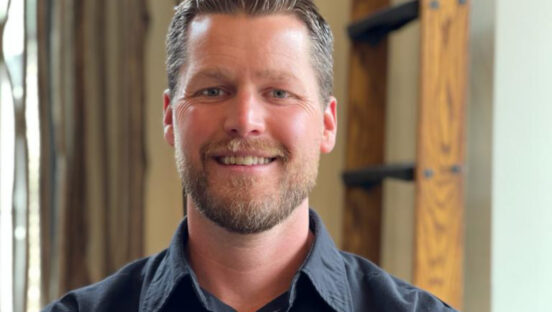

Sean Huggard is in the process of learning how to hang up his chef’s hat sometimes to don his CEO hat—but on the day of our conversation, he was wearing a DJ hat (figuratively, of course), sitting in the office and figuring out how to fix the music before dinner service at one of his newest Denver restaurants, Ash and Agave. “That’s what I do on a daily basis. My role is forever evolving,” he says. “I came from this; I was a dishwasher. I was a cook. I’m still a cook, and I still love to cook. I was just downstairs with my director of culinary talking about an oyster shooter of all things, and how I envisioned it.”
His passion for food and restaurants stems from his Boston roots and an early career in the industry that started as a teen working in a deli, mopping floors and cutting up chicken in the kitchen. At just 19 years old, he opened his first restaurant—Keepers on Cape Cod—serving as executive chef while completing his formal education. After graduating from the Culinary Institute of America in New York in 2002, he refined his culinary voice as executive chef at The Summer House on Nantucket Island before relocating to Los Angeles to work with Houston’s, part of the Hillstone Restaurant Group.
His path then took him to Denver, where he oversaw a hospitality portfolio spanning restaurants and boutique hotels as director of operations for Concept Restaurants before he founded Shucking Good Hospitality in 2016.
As the restaurant group name implies, Huggard isn’t shy about the deep role and importance that seafood plays in his life. “Seafood is absolutely my passion. The ocean—not only do I love to cook its bounty, I love to eat its bounty, and it’s also just my happy place,” he says. The morning of our conversation, he even told his wife, Jennifer, “If I don’t get to the beach in the next three weeks, I’m going to lose my mind. I need that in my life.”
Huggard is leveraging that love for stellar seafood to grow his three restaurant concepts outside of Denver. A key part to his story? Shucking Good Hospitality is one of the only restaurant groups in the area to control its seafood supply from dock to dish.

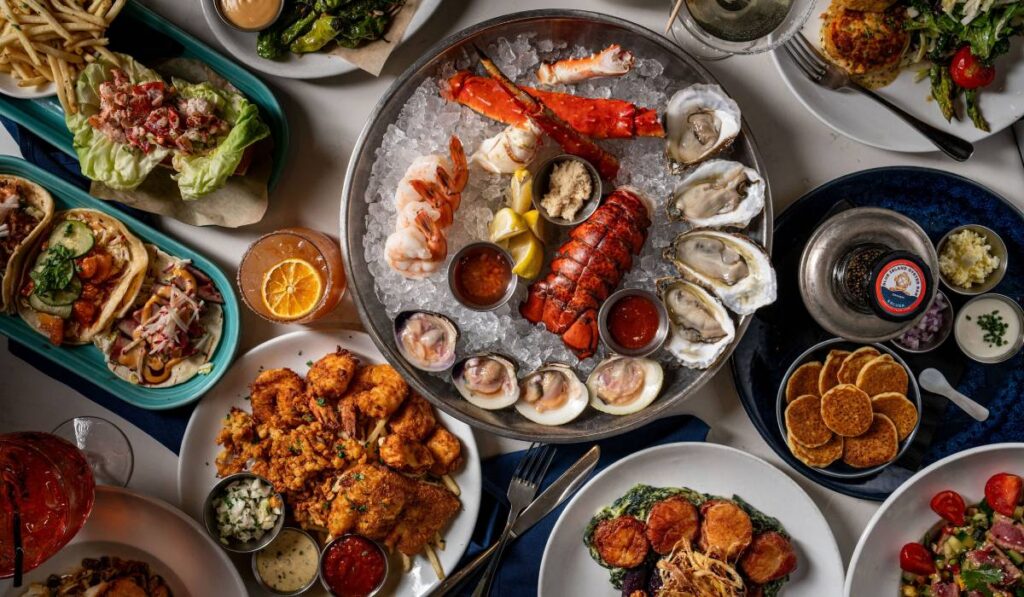
His concept Blue Island Oyster Bar & Seafood has delivered East Coast-inspired seafood to Denver with unmatched freshness for over a decade, sourcing oysters and seafood daily from its own hatchery. Blue Island Shellfish Farms in Long Island, New York, was founded in 1995 by diver Chris Quartuccio, and helped pioneer the Sea-to-Table movement—earning a reputation as one of the nation’s premier seafood purveyors.
“There are very few people that do what we do. We have marine biologists that work at the hatchery out in Long Island. We’re a restaurant group that’s attached to scientists. We’re breeding and growing our own oyster seed, we’re bringing it out to the farm, [and] we’re telling that story,” Huggard says. “That’s a really unique story, that dock to dish story, that there’s maybe three other restaurants in the country that have that kind of relationship with their farm, that are also looking to grow nationally.”
People often assume if they’re in a coastal state eating seafood, it must be fresher than what they could find at home in Denver—but that’s not always the case, Huggard notes. “First of all, you’re eating a piece of halibut from the East Coast, but you’re sitting on a beach in L.A., so guess what? The halibut already flew over Colorado. We had it the day before,” he points out. “It’s been a long, uphill education battle, but I think we’re here in Colorado now. People know and depend on us for fresh seafood in all of our restaurants.”
When he first moved to the landlocked state of Colorado just over 20 years ago, Huggard—a New England native and aforementioned former chef on Nantucket Island—had to find a way to “bring a piece of Nantucket back to Denver.”
That was exactly the goal he had in mind when opening his first restaurant in Denver back in 2005 with his business partner, Steve White. Located in the historic shopping district on South Pearl Street, they named the restaurant Black Pearl. “It was not named after the Johnny Depp movie, although people absolutely associated it with ‘Pirates of the Caribbean.’ In hindsight, maybe it was a terrible name,” he laughs. “Honestly, it was such a low volume restaurant … but we got a ton of national press out of it.”
Though the restaurant didn’t perform as well as he hoped, the legacy lived on long after it closed in 2016; there are still guests who come into his current restaurants talking about a menu item from Black Pearl, Huggard notes.
“There were only a handful of restaurants 20 years ago that were making Denver a foodie, ‘chefy’ scene. And I came in as the young guy in my early 20s, and my good friend, Troy Guard—who I consider a celebrity chef in Denver—took me under his wing, and was nice to me when he didn’t need to be,” he says.
Making waves and bringing a seafood-driven concept to a “meat and potatoes town,” as some people call it, proved to be a challenge—but not one that Huggard couldn’t overcome. “It feels good to know that we brought fresh seafood and the world’s greatest oysters, period, to Denver, Colorado,” he says, also noting the rise of the city’s culinary scene over the years, demonstrated by the arrival of Colorado’s first Michelin Guide in 2023.
Huggard opened the first Blue Island in Cherry Creek in 2015, with a menu built around raw bar favorites and coastal classics and an emphasis on oysters, clams, shrimp cocktail, crab legs, and caviar, plus appetizers like fried calamari and grilled Spanish octopus. Signature entrees and classics range from fresh lobster mac and cheese to an elevated cracker-crusted fish & chips with Pacific sea bass, malt vinegar tartar sauce, shoestring fries, and cole slaw. Grilled seafood such as Atlantic salmon, New Bedford sea scallops, and Miso Chilean sea bass round out the large menu.
“It was not easy to build the culture of seafood in Denver. It took me 11 years, and we went from being open the first year to doing $1.5 million, to this year, we’ll do $12 million with [Blue Island Oyster Bar & Seafood],” he adds. “It’s taken time to grow that versus other markets that are more coastal.”
But now, Huggard has his eyes set on a new challenge: opening 20 restaurants from coast-to-coast in 10 years. That includes growing Blue Island—which opened its second location in south metro Denver in 2022—alongside his two other brands, plus more concepts in development.
Oliver’s Italian brings cozy Italian-American classics, while Ash and Agave, the newest addition to the lineup that opened in April in Cherry Creek, offers a coastal Mexican-inspired escape with immersive dining and vibrant flavors. There’s already a second location planned for Ash and Agave near Oliver’s Italian in the Denver Tech Center area, within 15 miles of downtown Denver.
Ash and Agave follows Huggard’s signature style of celebrating the ocean’s bounty with a signature raw bar while showcasing the nuanced, smoky flavors imparted by wood-fired cooking. Complementing the menu is a mezcal- and tequila-centric beverage program that artfully blends the rich heritage of agave spirits with contemporary mixology.
“As much as I love Oliver’s and Ash and Agave, you see those similar types of restaurants in other markets already—there might be somebody local already doing that just as well or better, whereas no one’s doing what we do at Blue Island,” he says.
“There’s very few restaurants in any market that have built the type of concept that we have at Blue Island—an oyster focused, boutique seafood brand with a great story that’s hip and buzzy and transforms throughout the day. You just don’t see it,” Huggard adds. “And when you do see it, I always feel like because it doesn’t have the real connection to a farm like we do, it just never is articulated as well. It feels a bit contrived to me, to be honest. So that’s why we’re really leaning into that as our growth vehicle.”
In the meantime, he’s still honing his delegating skills and learning to let go of the reins bit by bit as the restaurant group grows—but he’ll never be an absentee owner or operator. “Now that we’re getting bigger and evolving, I tell my teams, ‘I know I’m a pain in the ass when I’m in the restaurants, but I’m a pain in the ass because I love it,’” Huggard adds.